
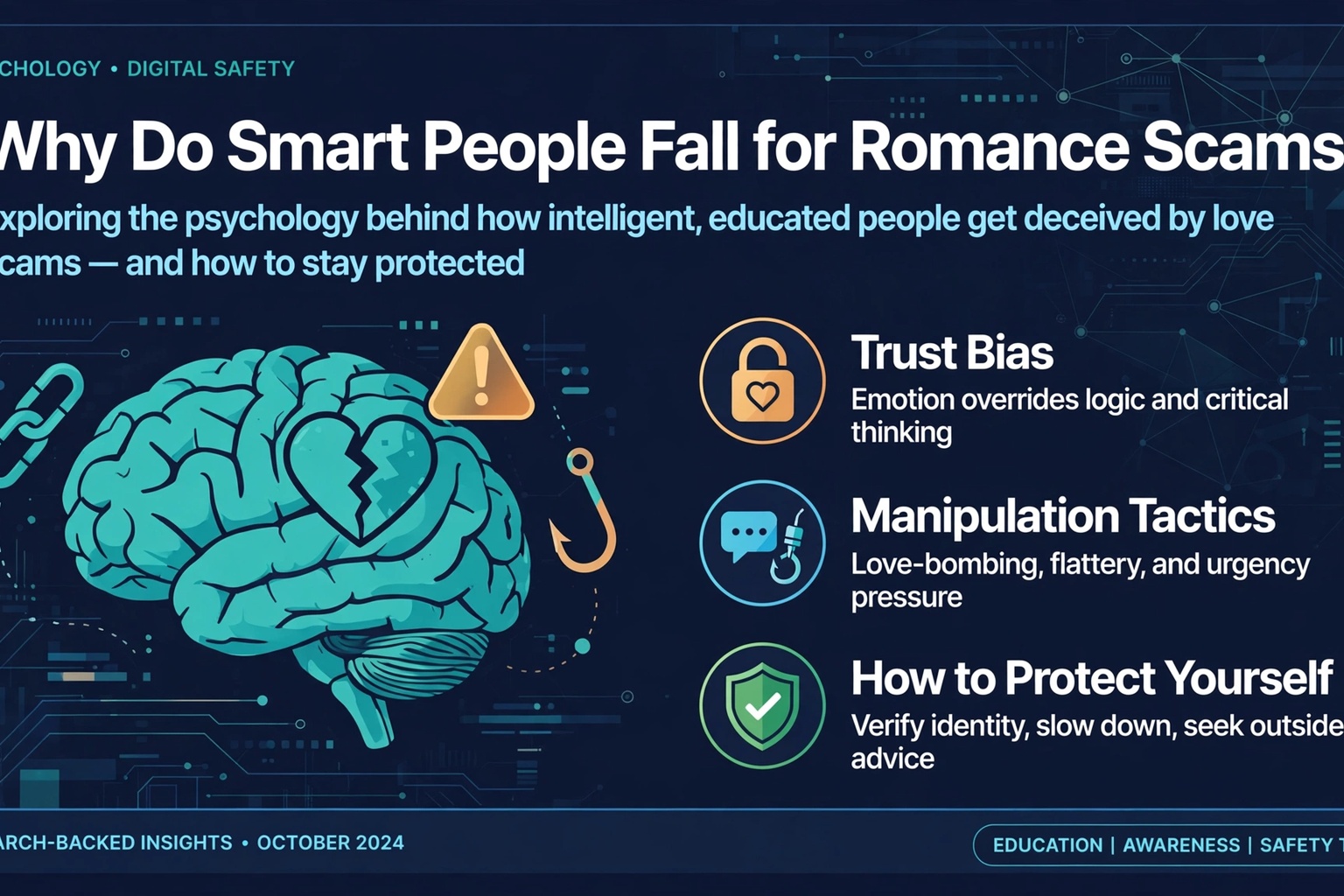
Ask a romance scam victim what stings most and it usually isn’t just the money — it’s the disbelief. ‘I’m not stupid. How did I fall for this?’ The answer, according to federal investigators and the data, is that these scams aren’t designed to fool stupid people. They’re designed to hijack normal human psychology, and they work on exactly the people who think they’d never fall for one.
The U.S. Senate’s report on the Romance Scam Prevention Act puts the scale in perspective: in 2024, over 59,000 consumers lost nearly $1.2 billion to romance scams, with a median loss of $2,000, according to FTC consumer fraud reports. In 2023, more than 64,000 Americans lost over $1 billion — double what was lost just four years earlier. Tens of thousands of victims a year, losing thousands each. That’s not a gullibility problem. That’s an industrial process.
It’s engineered, not accidental
The Senate report describes romance scams as increasingly sophisticated, with criminal organizations investing in them precisely because they generate large profits — and with AI tools now making the deception sharper. The FTC explains the core mechanic: scammers strike up a relationship to build trust, sometimes talking or chatting several times a day, and only then invent the crisis that needs your money.
That sequence matters. The scam doesn’t start with a money request — it starts with weeks of attention, affection, and manufactured intimacy. By the time the ’emergency’ arrives, the victim isn’t evaluating a stranger’s request. They’re helping someone they believe loves them. Psychologists call this the commitment principle: once we’ve invested emotionally, walking away feels like betrayal, not prudence.
The targeting is deliberate
Scammers don’t spray and pray. The Senate report notes victims aren’t limited to young people dating online — scams often target the elderly and veterans. FBI data cited in the report found more than 6,700 people over 60 lost nearly $367 million to romance scams in 2023. The DOJ has warned that nearly 40 percent of the military community’s fraud losses came from imposter and romance scams.
Widowed, divorced, lonely, recently relocated — scammers read profiles the way marketers read demographics. They find the need and become the answer to it. That’s not stupidity on the victim’s part. That’s predation.
Intelligence isn’t the defense — process is
Smart people fall for these scams because the scam bypasses analysis and goes straight for emotion. The defense isn’t being smarter. It’s having rules you follow before the emotion kicks in: never send money to someone you haven’t met in person (the FTC’s bottom line). Reverse-image-search every profile photo. Talk to a trusted friend before any money moves — the scammer’s insistence on secrecy is itself the confession.
The smartest thing a smart person can do is admit the con was built for people exactly like them.
The Senate report adds a final reason smart people keep falling: the con is getting smarter. It warns that romance scams have grown increasingly sophisticated with AI tools — cloned voices, generated photos, chatbots that never sleep — and that criminal organizations are investing heavily because the profits justify it. There are even reports of ready-made pig-butchering scam kits being sold to other criminals online. You’re not matching wits with a lone liar; you’re up against an industry with R&D. That’s not an excuse — it’s the argument for process over pride. Rules beat intelligence here: verify identity through independent channels, never send money to someone you haven’t met in person, and treat the rush to move off-platform as the confession it is.
Disclosure: The stories on Love Lies Abroad are based on publicly reported accounts. We are not stating these as facts — this is what was reported. If you are featured in a story and believe it is inaccurate, contact us and we will review it, correct it, or take it down.
Submit a correction, documentation, context, or a response for private editorial review. Contact the editorial desk.
Join the conversation
Load Facebook comments to read and reply using your Facebook account.