
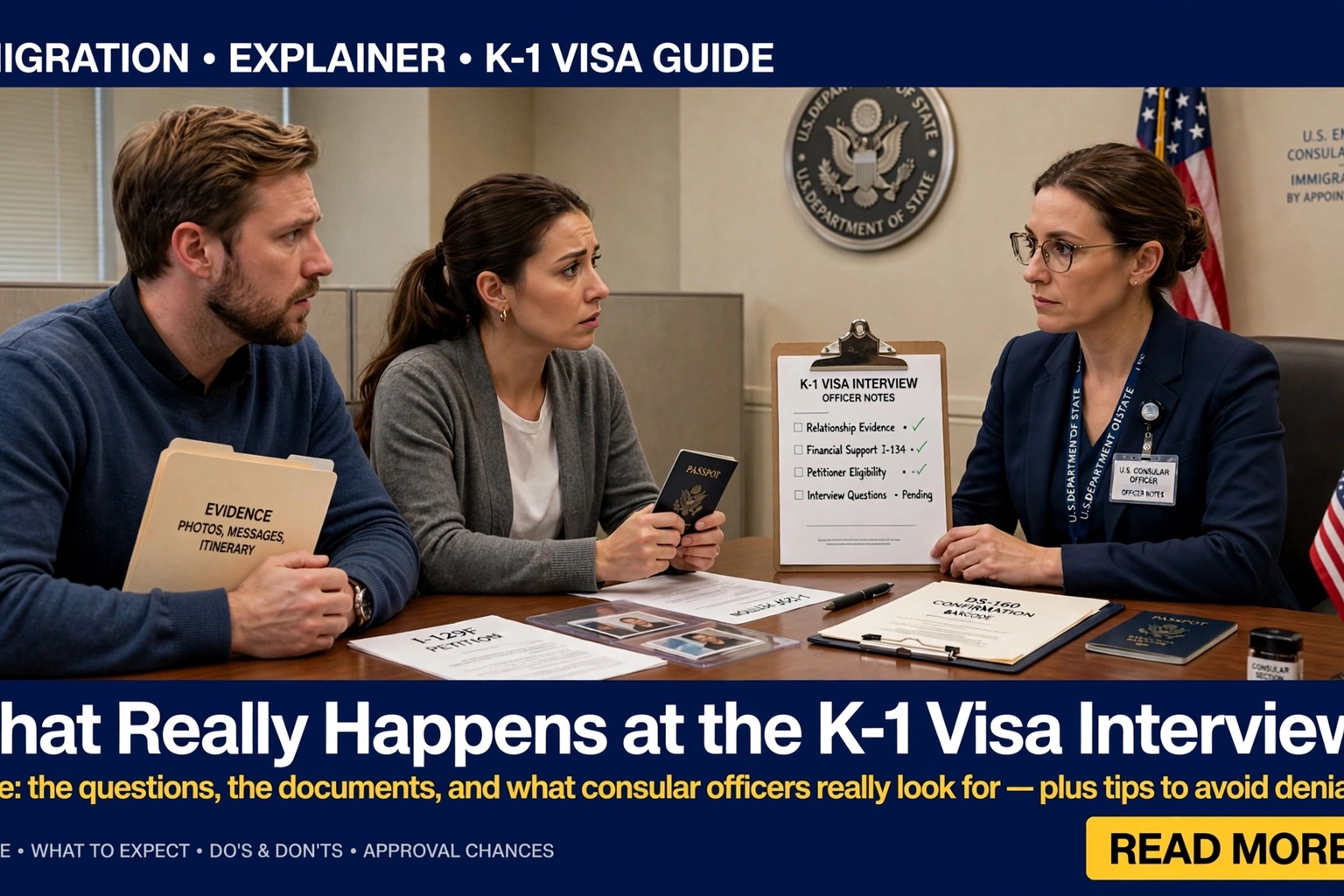
The K-1 visa interview is the moment a fiance(e) petition stops being paperwork and becomes a conversation. After U.S. Citizenship and Immigration Services approves the I-129F petition and the National Visa Center forwards the case, the foreign fiance(e) attends an in-person interview at a U.S. embassy or consulate abroad. Couples who know what actually happens in that room walk in calmer — and calmer applicants give better interviews.
Getting to the interview
The interview cannot be scheduled until several steps are complete. The applicant fills out Form DS-160, the Online Nonimmigrant Visa Application, pays the K visa application fee (currently $265), and books the appointment through the embassy’s scheduling system. A medical examination must be completed with a designated panel physician — an exam from a family doctor does not satisfy the requirement, and results arrive in a sealed envelope that the applicant must not open. Police certificates are generally required covering places the applicant has lived, and the U.S. citizen petitioner supplies Form I-134, Affidavit of Support, backed by tax returns, employment verification, and pay evidence. Gathering police certificates can take months in some countries, so this step should start the moment the case reaches the NVC, not the week of the interview.
Who is in the room
The applicant attends alone. The U.S. citizen petitioner does not attend the embassy interview — this surprises couples who assumed they would go together. Interviews are typically brief, often ten to twenty minutes, and the officer works from the file: the approved I-129F, the DS-160, the civil documents, and the financial evidence. Some posts collect fingerprints at the interview; all of it is routine.
What the officer is deciding
Two questions drive the interview. First, is the relationship genuine? Expect questions about how the couple met, the story of the in-person visits, how often they communicate and by what means, details about the petitioner’s life (job, home, family), and plans after arrival — including the legal requirement to marry within 90 days of entry. Second, is the applicant admissible? The officer reviews criminal history, prior immigration violations such as overstays, and health-related grounds, and confirms identity against the documents.
How credibility is actually judged
Officers interview hundreds of couples. They are listening for consistency between the applicant’s answers, the petitioner’s statements in the I-129F, and the documentary record — not for a performance of romance. Vague answers about basic facts (when the last visit happened, where the petitioner lives, what the wedding plan is) raise flags. Honest “I don’t remember” beats a guessed date every time. Couples with a real relationship who know their own story rarely have trouble here.
After the interview
Three outcomes are possible. Approval means the passport is kept and returned with the visa, usually within days or weeks. A refusal under section 221(g) means the case needs something more — documents, or administrative processing — and the applicant should follow the instructions on the refusal slip precisely. An outright refusal usually traces to ineligibility or a finding that the relationship is not bona fide. An approved K-1 visa is generally valid for six months for a single entry, and the 90-day marriage clock starts at admission, not at issuance — so there is no reason to delay travel once the visa is in hand.
This article is general information only. For case-specific concerns — prior refusals, criminal history, complicated travel records — consider consulting an immigration attorney before the interview, not after a refusal.
Sources: https://www.uscis.gov/family/family-of-us-citizens/visas-for-fiancees-of-us-citizens https://www.uscis.gov/i-129f
Disclosure: The stories on Love Lies Abroad are based on publicly reported accounts. We are not stating these as facts — this is what was reported. If you are featured in a story and believe it is inaccurate, contact us and we will review it, correct it, or take it down.
Submit a correction, documentation, context, or a response for private editorial review. Contact the editorial desk.
Join the conversation
Load Facebook comments to read and reply using your Facebook account.