
If you are dating someone abroad and you have never had a clear, live video call with them, you do not have a relationship problem. You have a verification problem. And verification problems get expensive.
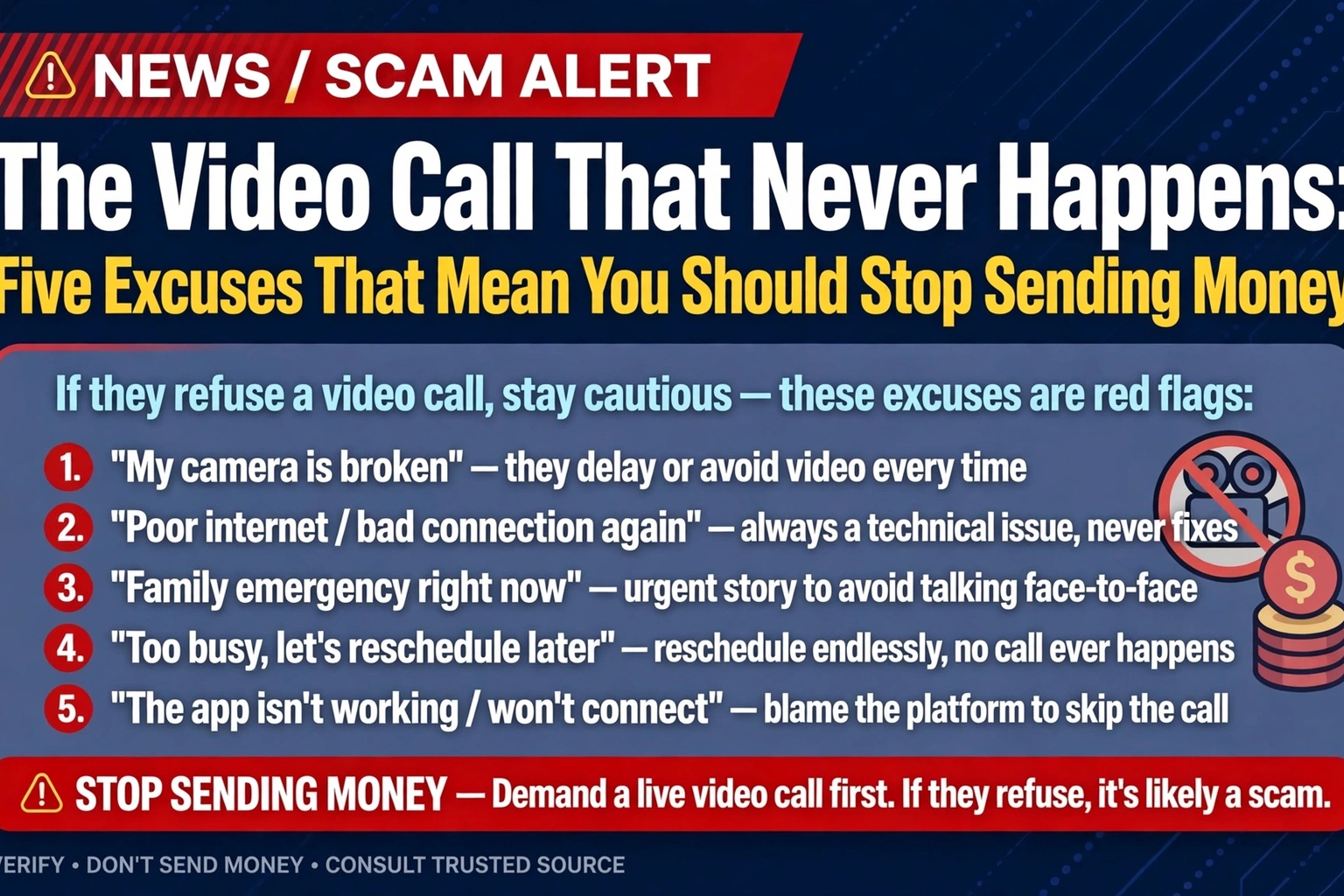
Scammers who run long-distance romance fraud almost always protect one thing: the gap between the person in the photos and the person typing to you. A live video call closes that gap in seconds, which is exactly why it keeps not happening. Here are the five excuses that should change what you do next.
1. The camera is always broken
One broken camera is bad luck. A broken camera, a broken laptop, and a phone that can only do voice notes for three straight months is a pattern. Ask for a specific, unscripted moment instead: a short video saying your name and todays date, filmed somewhere recognisable. A real partner can do that in a minute. A photo thief cannot.
2. The job forbids video
Military deployments, oil rigs, and aid work do limit contact, and scammers borrow those uniforms for cover. Real service members still get leave, still video-call family, and never need a stranger to pay for their flight home, their leave paperwork, or a gift card to process anything. If money enters a story about a deployment, stop and verify through official channels, not through the person asking.
3. The connection is never good enough for video, but good enough for everything else
Notice what does work. Photos arrive. Long messages arrive. Voice notes arrive. Only the one format that proves identity fails. Bandwidth does not discriminate like that. People do.
4. You are asked to prove your love first
This is the pivot from logistics to pressure: send the ticket money, clear the emergency, show you trust them, and then you will meet. Real affection does not run a toll booth. Anyone who makes a first meeting conditional on a payment is telling you what the meeting is for.
5. Every planned call dies at the last minute
An emergency, a funeral, a hospital visit, a sudden work call. Once is life. Every single time, at the exact hour a camera would come on, is management. Keep a simple log of scheduled calls and what cancelled them. Patterns are hard to argue with when they are written down.
What to do instead
Stop sending money until you have had a live, two-way video conversation. Tell a friend the full story out loud, including the amounts sent, because secrecy is part of how these schemes survive. Save screenshots, receipts, and profile links before you confront anyone, and report the profile to the platform. If you have already sent money, contact your bank promptly and keep your paper trail together: dates, amounts, names used, and payment methods.
None of this means everyone you meet from another country is running a scam. Most people are who they say they are, and they will prove it without drama, because proving it costs them nothing. The person who makes proof feel like betrayal is the one to walk away from, before the next excuse costs you more than time.
Submit a correction, documentation, context, or a response for private editorial review. Contact the editorial desk.
Join the conversation
Load Facebook comments to read and reply using your Facebook account.