
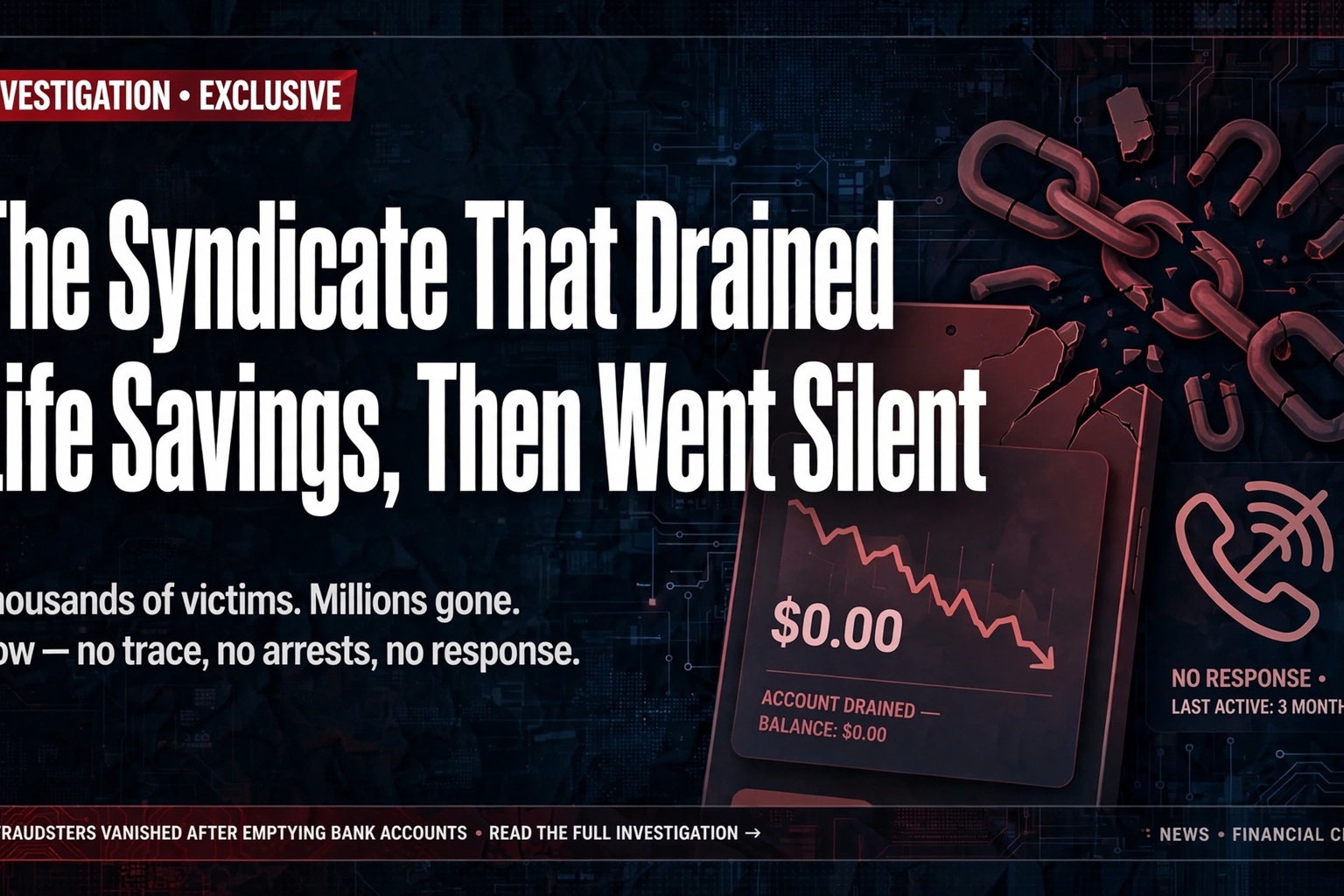
They trolled Match.com and Bumbledate under fake names, looking for widowed and divorced men and women. They spun stories about inheritances trapped behind tax bills, urgent overseas travel, crippling debt. And when the victims’ accounts were empty — often emptied entirely, life savings gone — the messages simply stopped.
That was the method of the network Frederick Orji belonged to, and it is why his case reads like a field manual for the modern romance-scam syndicate. Orji, 38, a naturalized U.S. citizen born in Nigeria, was charged alongside ten co-conspirators in a large-scale operation led by the FBI in September 2021. He pleaded guilty in June 2022 to conspiracy to commit wire fraud and was sentenced to 37 months in federal prison by Chief U.S. District Judge David Godbey, who also ordered $418,030 in restitution.
What distinguished this ring was its structure. Prosecutors said a majority of the defendants had ties to a transnational organized crime syndicate originating in Nigeria. In his plea papers, Orji admitted the coldest detail in the file: once he and his conspirators had depleted the victims’ accounts of everything the victims were willing and able to send, the defendants stopped communicating. The romance had a balance sheet, and when it hit zero, so did the relationship.
The ripple effects kept spreading after Orji’s sentencing. His brother and co-defendant, Emanuel Stanley Orji, also pleaded guilty to conspiracy to commit wire fraud and received 37 months. Ijeoma Okoro, tried in the same investigation, was sentenced to ten years and ordered to pay $2.2 million in restitution — with the judge applying a sentencing enhancement after finding she committed perjury at trial. David Animashaun and Oluwalobamise Michael Moses each received 24 months. One indicted co-defendant, Chukwuemeka Orji, remained a fugitive.
The investigation was led by IRS Criminal Investigation with assistance from the FBI’s Frisco field office, Homeland Security, and the Department of Labor’s Office of Inspector General — a reminder that romance fraud, at scale, is financial crime first and heartbreak second.
For the victims — elderly, many widowed or divorced, targeted precisely for their loneliness — the syndicate’s silence at the end was the final cruelty. The accounts were empty. So the lovers vanished.
Sources: U.S. Department of Justice, NDTX — Romance Scammer Sentenced to 3+ Years (2022); IRS Criminal Investigation — Romance Scammer Sentenced to 10 Years (2023)
Disclosure: The stories on Love Lies Abroad are based on publicly reported accounts. We are not stating these as facts — this is what was reported. If you are featured in a story and believe it is inaccurate, contact us and we will review it, correct it, or take it down.
Submit a correction, documentation, context, or a response for private editorial review. Contact the editorial desk.
Join the conversation
Load Facebook comments to read and reply using your Facebook account.