
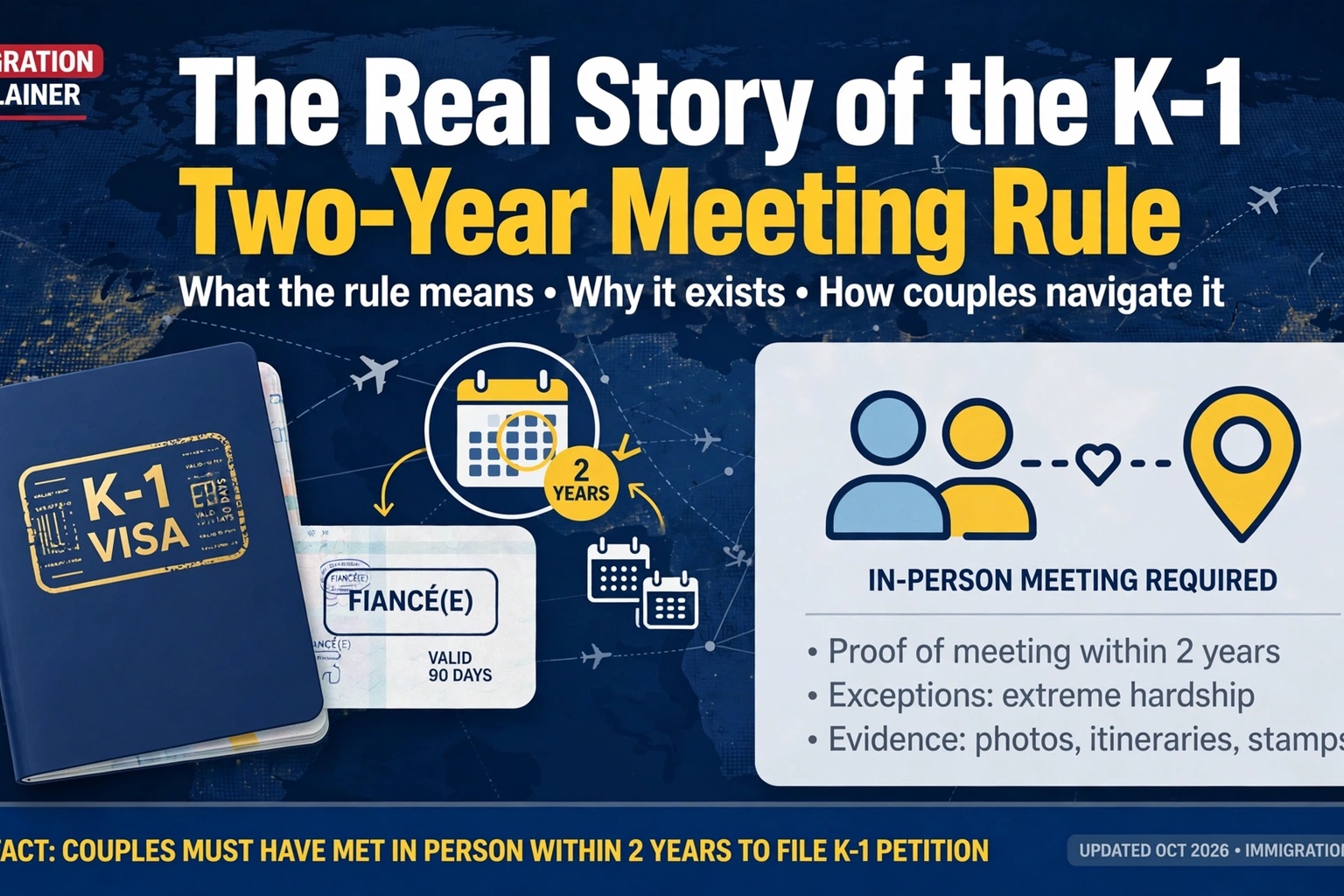
Of all the K-1 requirements, the in-person meeting rule ends the most cases before they start — and it is the one couples argue with most. The law requires the couple to have met in person at least once within the two years before the I-129F is filed. Daily video calls for three years do not count. One weekend together eleven months ago does. Here is what the rule really demands, the narrow doors out of it, and how to document compliance so it never becomes an issue.
What counts as meeting
USCIS looks for evidence of physical presence together: passport stamps, boarding passes, hotel receipts showing both names, and dated photos of the couple together. The meeting must fall inside the two-year window measured backward from the filing date — a trip two years and one month before filing does not satisfy the requirement, no matter how well documented. Couples should file while at least one qualifying meeting sits safely inside the window, not balanced on its edge. Multiple meetings are better than one, but one solid, well-documented meeting is legally sufficient.
The two exceptions — and how narrow they are
USCIS may waive the meeting requirement in only two situations: where compliance would result in extreme hardship to the petitioner, or where it would violate the strict and long-established custom of the beneficiary’s culture or social practice. “Extreme hardship” means substantially more than expense or inconvenience — it contemplates serious barriers such as medical conditions preventing travel or country conditions making it genuinely impossible. The cultural exception requires showing the custom truly prohibits premarital meeting, not merely that the family prefers otherwise. Both waivers are discretionary, evidence-intensive, and granted rarely. Couples who assume they qualify usually do not.
Evidence strategy
Do not rely on a single photograph. Build a layered record: travel documents proving both people were in the same place at the same time, timestamped photos together across the visit, and a brief timeline of the trip in the petitioner’s cover statement. If the only qualifying meeting is near the two-year boundary, file promptly — every month of delay pushes it closer to expiring out of the window. And keep the originals: the consular officer may want to see them at the interview, not just the copies USCIS saw.
Why the rule exists
Congress added the meeting requirement to deter petitions filed for people the petitioner had never actually met — the classic brokered-marriage abuse pattern. Understanding that purpose helps couples present their case correctly: you are demonstrating a real, physical relationship, not a paper one. Frame the evidence as the story of the visit — where, when, what you did — and the requirement takes care of itself. Couples considering a waiver argument should involve an immigration attorney early; it is one of the hardest discretionary calls in the K-1 process. Informational only.
Couples with an unusual meeting history — a single short trip, or meetings only in third countries — should over-document rather than under-document. Third-country meetings are perfectly valid; they simply need the same travel proof as any other visit, since officers cannot take the trip on faith alone.
Sources: https://www.uscis.gov/i-129f https://www.uscis.gov/family/family-of-us-citizens/visas-for-fiancees-of-us-citizens
Disclosure: The stories on Love Lies Abroad are based on publicly reported accounts. We are not stating these as facts — this is what was reported. If you are featured in a story and believe it is inaccurate, contact us and we will review it, correct it, or take it down.
Submit a correction, documentation, context, or a response for private editorial review. Contact the editorial desk.
Join the conversation
Load Facebook comments to read and reply using your Facebook account.