
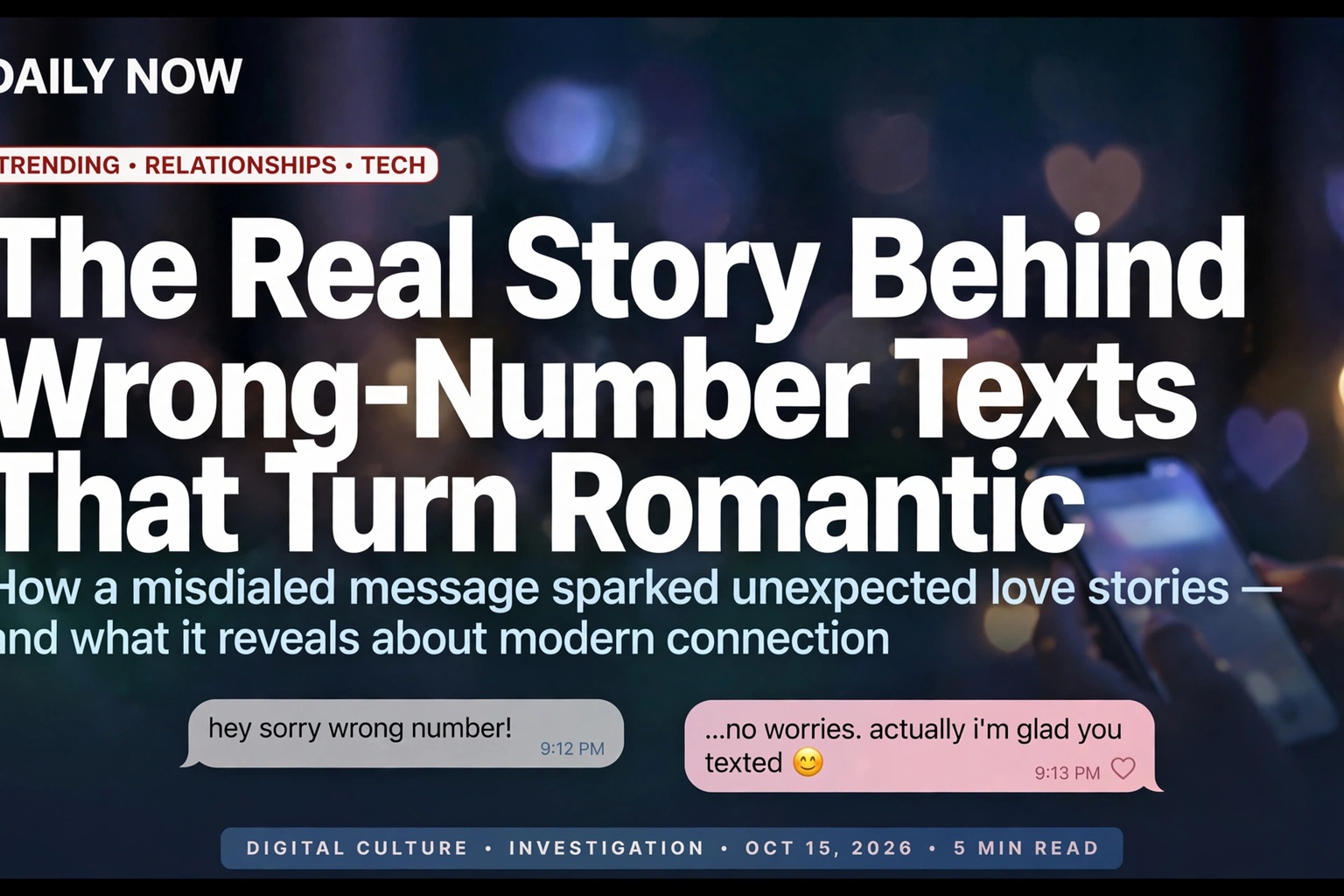
‘Hi, is this Sarah? We met at the conference last month…’ It’s not Sarah. It’s not anyone the sender knows. The wrong number is the point. Within a few messages the stranger is charming, apologetic, curious about you — and within a few weeks, they’re the most attentive person in your life. And eventually, they mention crypto.
The wrong-number opener is one of the fastest-growing romance scam funnels, and the real story behind it is pure industrial engineering.
It’s not a mistake — it’s a filter
Scam operations blast thousands of wrong-number texts. Most people ignore them or reply ‘wrong number’ and move on. But a fraction engage — the lonely, the polite, the curious. Those replies are gold: they’ve just self-identified as willing to talk to strangers. The operation hands the conversation to a human (or increasingly, an AI-assisted script) and the ‘romance’ begins.
The Senate’s Romance Scam Prevention Act report describes how these schemes have grown more sophisticated with AI tools, with criminal organizations investing heavily because the profits are enormous. The wrong-number text is the top of a very professional funnel.
The pivot: from stranger to sweetheart to ‘advisor’
The relationship phase follows the classic FTC-described pattern: frequent contact to build trust, sometimes chatting several times a day. Then comes the pivot the Senate report made famous — pig butchering. The new ‘friend’ casually mentions their crypto success. They offer to show you. Small investment, quick returns, a fake platform showing your balance climbing. Then the ask grows, the withdrawals freeze, and the stranger who texted the wrong number vanishes with your savings.
The Commodity Futures Trading Commission’s warning on romance frauds describes exactly this endgame: the trading site, the friend, and the profits are all fake — designed to build trust and take as much money as possible.
The real story is the economics
A wrong number costs nothing to send and reaches everyone. It’s the cheapest possible prospecting, and it works because it bypasses every defense: there’s no dating profile to reverse-image-search, no platform fraud detection watching (the conversation starts in your texts), and the ‘accidental’ framing disarms suspicion completely.
The defense is recognizing the pattern, not the person. An unsolicited text from a stranger that evolves into a romance that evolves into an investment opportunity is a documented scam pipeline — the Senate report, the CFTC, and the FTC all describe its stages. The FTC’s rule still applies even when there’s no dating app involved: never send money or gifts to a sweetheart you haven’t met in person. And never take investment advice from a wrong number.
The wrong-number funnel has a defense the scammers can’t engineer around: don’t engage with unsolicited romantic strangers, period. No reply, no ‘who is this,’ no polite correction that turns into a conversation — every response is data telling the operation you’re a live prospect. If a wrong number somehow becomes a weeks-long correspondence that becomes an investment pitch, you’ve watched the documented pipeline execute in order: the Senate report describes the AI-assisted sophistication, the CFTC describes the fake-platform endgame, and the FTC’s core rule covers the whole thing. Never send money to someone you haven’t met in person — and never take investment advice from someone who found you by ‘accident.’ The number wasn’t wrong. The intentions were exactly what they looked like once you know the script.
Disclosure: The stories on Love Lies Abroad are based on publicly reported accounts. We are not stating these as facts — this is what was reported. If you are featured in a story and believe it is inaccurate, contact us and we will review it, correct it, or take it down.
Submit a correction, documentation, context, or a response for private editorial review. Contact the editorial desk.
Join the conversation
Load Facebook comments to read and reply using your Facebook account.