
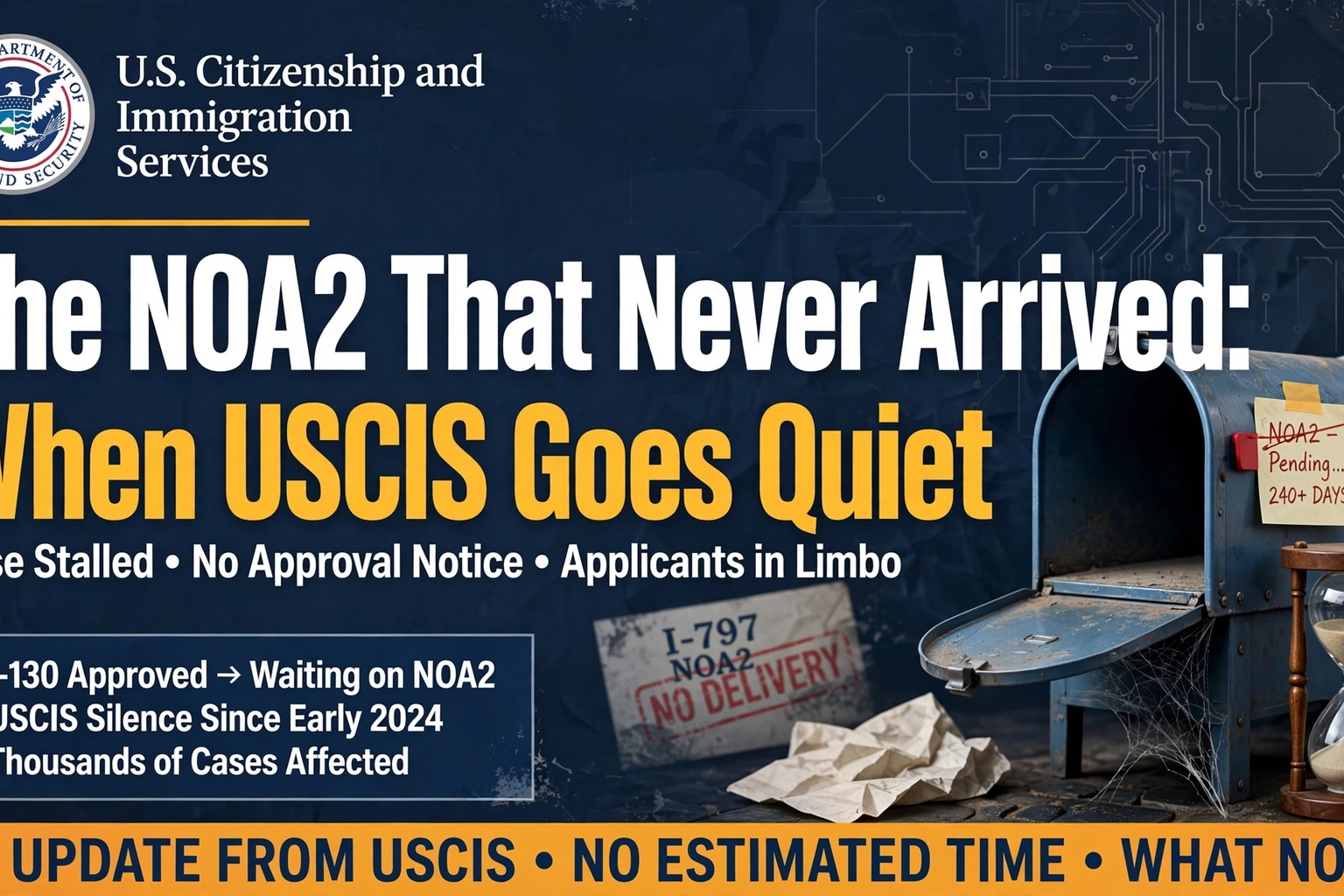
You filed the I-129F. The receipt notice came. Then nothing — for months past the posted processing time, with the online case tracker frozen on “case received.” No denial, no request for evidence, no approval. Just silence. It is one of the most stressful phases of the K-1 process precisely because there is nothing to react to, and forums full of faster approvals make it feel personal. It usually is not.
First: confirm the case is actually late
USCIS publishes processing times by form and service center, and “late” means outside that posted window — not outside the timeline a forum poster reported. Check the USCIS case processing times page for the I-129F, confirm which service center holds the case from the receipt notice, and compare dates carefully. If the case is within normal times, the answer really is to wait; inquiries filed too early simply get told to wait longer.
The formal inquiry
Once a case is outside normal processing times, USCIS accepts a case inquiry — often called a service request or e-request — through its online tools. This puts the file in front of an officer for a status check and creates a record of the inquiry. It does not guarantee speed, and responses are often generic, but it sometimes shakes loose a case stalled on an administrative step, and it starts the paper trail that later escalation steps require.
Check the unglamorous possibilities
Before assuming the worst, rule out the mundane. A change of address never reported to USCIS — required within 10 days of moving — means correspondence went to the old mailbox. A receipt number mistyped into the case tracker means you have been watching someone else’s silence. A request for evidence mailed months ago and never answered means the case may already be denied on the existing record. Each of these is more common than couples expect.
When silence becomes a problem to escalate
If an inquiry produces no movement over additional months, established escalation paths exist. Congressional casework offices routinely ask USCIS for status updates on constituents’ cases. The DHS Office of the Citizenship and Immigration Services Ombudsman assists with cases stuck after normal channels fail. And for extreme delays, an immigration attorney can assess whether a writ of mandamus — a federal lawsuit asking a court to compel the agency to decide — fits the facts. That step is expensive and fact-specific, never a first resort.
Protecting the case while you wait
Keep the evidence fresh: if the two-year meeting window is aging, understand the implications for a potential refile. Keep passports valid, keep living arrangements and contact information current with USCIS, and keep copies of everything. For most couples the sequence is simple — verify lateness, file the inquiry, keep records, escalate patiently — and the approval eventually arrives with no explanation for the wait. Informational only.
One more check while waiting: make sure the petition itself is still viable. The two-year meeting window is measured from filing, so a long adjudication does not break it — but if you ever had to refile, a stale meeting could. Keep traveling together when you can; fresh evidence never hurts a pending case.
Sources: https://www.uscis.gov/i-129f https://www.uscis.gov/family/family-of-us-citizens/visas-for-fiancees-of-us-citizens
Disclosure: The stories on Love Lies Abroad are based on publicly reported accounts. We are not stating these as facts — this is what was reported. If you are featured in a story and believe it is inaccurate, contact us and we will review it, correct it, or take it down.
Submit a correction, documentation, context, or a response for private editorial review. Contact the editorial desk.
Join the conversation
Load Facebook comments to read and reply using your Facebook account.