
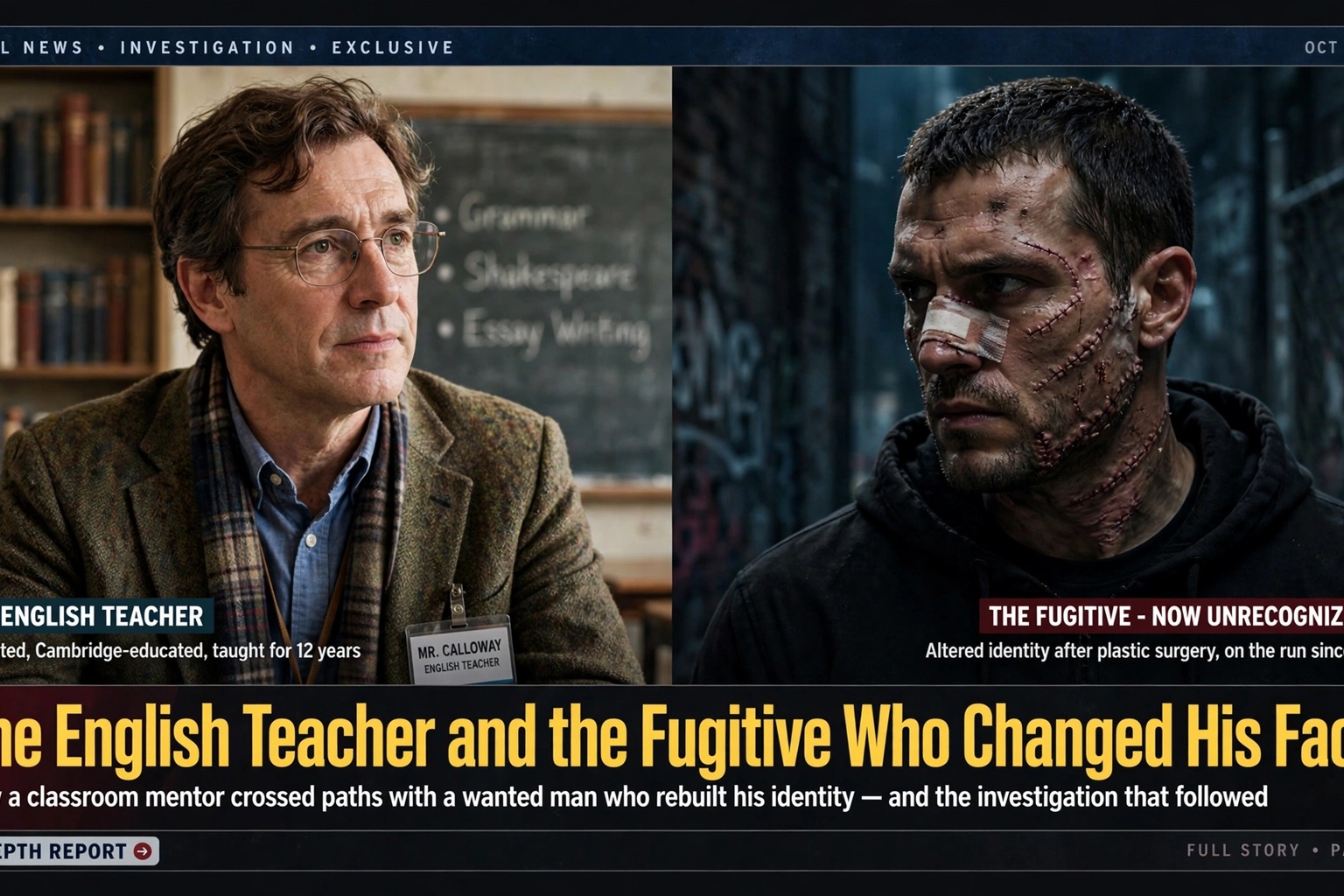
Lindsay Ann Hawker, a 22-year-old British teacher from Warwickshire working at a Nova language school in Japan, agreed to give a private English lesson to Tatsuya Ichihashi on March 25, 2007. They met at a café first — then he lured her to his apartment in Ichikawa, Chiba, where he bound, assaulted, and strangled her, then buried her naked body in a sand-filled bathtub on his balcony.
When Lindsay failed to come home, her boyfriend raised the alarm. Police arrived at Ichihashi’s apartment the next day to question him. He fled — barefoot — launching one of Japan’s most sensational manhunts.
What followed was two years and eight months on the run, during which Ichihashi became obsessed with changing his face. He cut the moles from his cheek with a blade, used scissors to remove a portion of his lower lip, and pushed a threaded needle through his nose to reshape its bridge. Later, under false names, he sought professional cosmetic surgery — procedures to add folds to his eyelids, thin his lips, and raise his nose. Police raised the reward for information to ten million yen and warned the public that the fugitive had altered his appearance.
The end came from vanity itself. In October 2009, Ichihashi visited a Nagoya clinic for another procedure and agreed to before-and-after photographs. A staff member grew suspicious and tipped off police; a construction coworker in Osaka recognized him too. On November 10, 2009, officers confronted him at an Osaka ferry terminal as he tried to board a ferry to Okinawa. Asked who he was, he answered plainly: “Yes, I am Tatsuya Ichihashi.”
He was initially charged only with abandoning a body, then served with warrants for rape and murder. His lawyers claimed he had been threatened with the death penalty to make him talk; in December 2009 he acknowledged involvement in her death while insisting he had not meant to kill her — that he had suffocated her to stop her screaming and even tried to resuscitate her.
The trial began on July 4, 2011. Ichihashi admitted luring Lindsay to the apartment, raping her, and strangling her, telling the court he was responsible for her death and apologizing to her family. On July 21, 2011, the Chiba District Court sentenced him to life imprisonment. The family had asked for the death penalty, but the court ruled it out: he had no previous convictions, and at 32 there was still a chance of rehabilitation. His appeal failed.
In a twist that outraged the public, Ichihashi published a memoir from prison, “Until I Was Arrested,” recounting his years as a fugitive — including time living rough on a tiny Okinawan island. It sold over a hundred thousand copies and was adapted into a film. He offered the royalties to Lindsay’s family. They refused, calling the book disgusting.
The Hawker case became a touchstone in discussions about the safety of young women teaching abroad — the private-lesson lure, the apartment meeting, the trust extended to a student. Her family campaigned tirelessly, and the case prompted renewed attention to how language schools vet private-lesson arrangements.
The fugitive-with-a-new-face detail made headlines, but the core of the story is simpler and sadder: a 22-year-old teacher who said yes to one private lesson and never came home.
Disclosure: The stories on Love Lies Abroad are based on publicly reported accounts. We are not stating these as facts — this is what was reported. If you are featured in a story and believe it is inaccurate, contact us and we will review it, correct it, or take it down.
Submit a correction, documentation, context, or a response for private editorial review. Contact the editorial desk.
Join the conversation
Load Facebook comments to read and reply using your Facebook account.