You are on a date in a foreign city. Something feels wrong, but calling for help would escalate everything. What you need is a way to say “get me out of here” that sounds like “having a great time.”
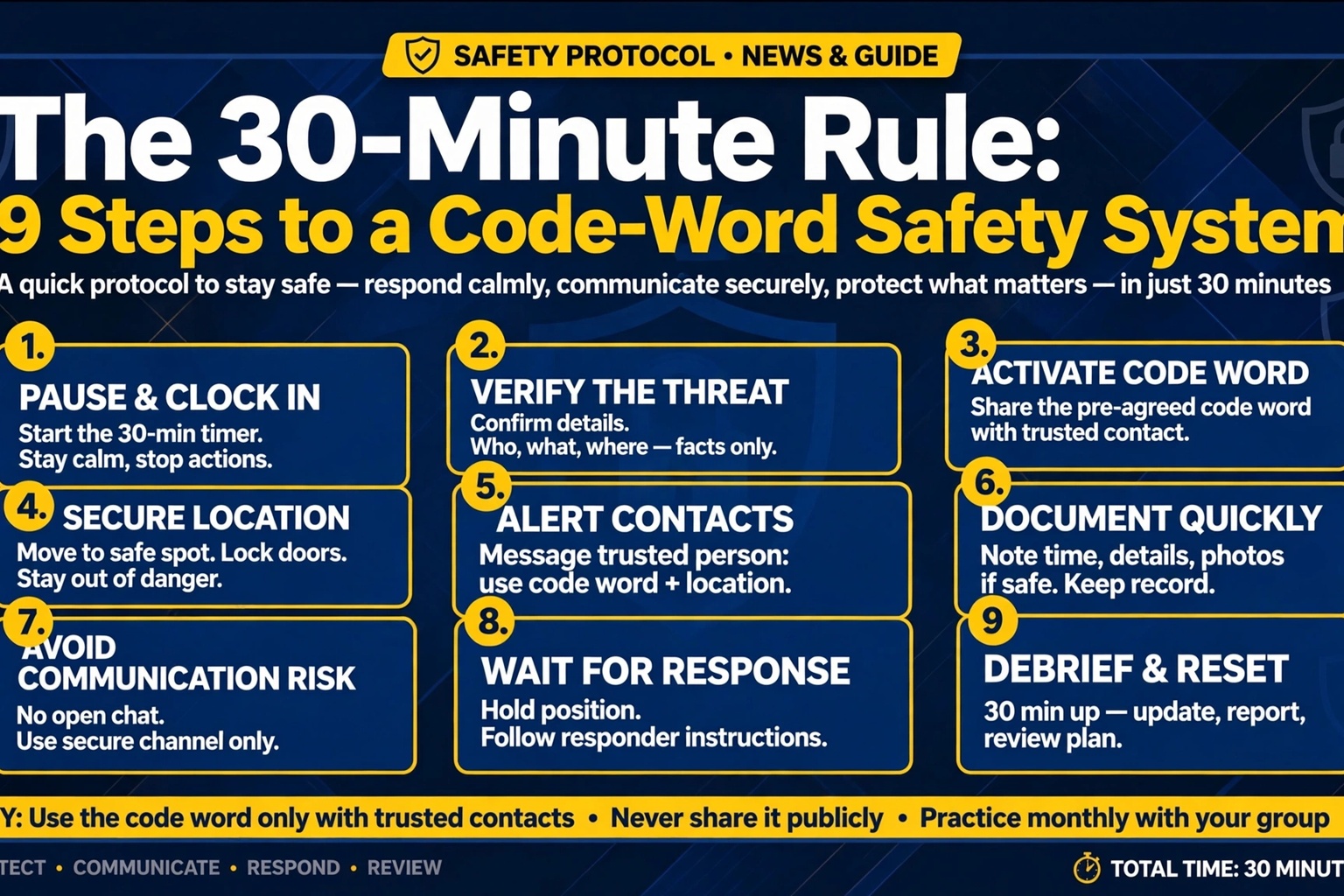
That is the code-word system. Nine steps. Set it up once, and it protects every trip you ever take.
Build It
1. Choose your person. One trusted contact who will be awake and reachable during your dates — timezone math matters. This person holds your code and your escalation plan.
2. Pick a check-in phrase. Something you will text when everything is fine: “The lasagna was amazing.” Normal, specific, boring. Your contact knows: this phrase means all good.
3. Pick a duress phrase. Equally ordinary, but one you would never say by accident: “Tell Mom the roses arrived.” One message containing it means I am not safe — get help now, and do not text back asking if I’m okay.
4. Set the 30-minute rule. During any date, your contact expects a check-in every 30 minutes — even just an emoji. Miss two in a row and they start the escalation: call you, then your hotel, then the embassy. Agree the timeline in writing before the trip.
Arm It
5. Add a “call me” code. A phrase that means “call me right now with a fake emergency so I have an excuse to leave”: “Did you feed the cat?” Your contact calls within two minutes with an urgent-sounding crisis. You apologize, leave, and nobody’s pride is wounded.
6. Set up silent location sharing. Continuous sharing for the whole trip. Your contact should be able to see your dot without asking. If your phone dies, the last location is still there.
7. Pre-write the escalation message. Your contact keeps a ready-to-send text with your full name, hotel, the date’s name and photo, and the embassy number. In a crisis they forward it — no fumbling, no forgotten details.
Test It
8. Run a dry drill at home. Go to dinner locally. Use the check-in phrase. Send the duress phrase once (warn your contact first). Time the response. Fix whatever is slow while nothing is at stake.
9. Refresh it every trip. New destination, new phrases. If a code leaks — you used it, someone saw it — retire it and pick a new one. A code-word system is like a password: it only works if it stays secret.
The women who escape bad situations fastest are rarely the bravest in the moment. They are the ones who arranged the rescue before the date started. Thirty minutes, nine steps, one system — and you never have to be the woman who had no way to ask for help.
When to Use It — and When Not To
The code-word system is for genuine unease, not for ending a boring date. Reserve the duress phrase for situations where you feel unsafe and cannot say so openly. The “call me” rescue, on the other hand, is fair game for any exit you want — a dull evening, a pushy companion, a vibe you do not like. There is no minimum danger required to leave a date. But keep the duress phrase sacred: if your contact ever receives it, they mobilize fully — embassy, police, everything. False alarms erode the system. Use each tool at its proper level, and the system stays sharp for the moment it truly matters.
Sources
- Wikipedia — Smart Traveler Enrollment Program
- UK Foreign, Commonwealth & Development Office — Travel Advice
- Wikipedia — Emergency telephone number
Disclosure: The stories on Love Lies Abroad are based on publicly reported accounts. We are not stating these as facts — this is what was reported. If you are featured in a story and believe it is inaccurate, contact us and we will review it, correct it, or take it down.
Submit a correction, documentation, context, or a response for private editorial review. Contact the editorial desk.
Join the conversation
Load Facebook comments to read and reply using your Facebook account.