
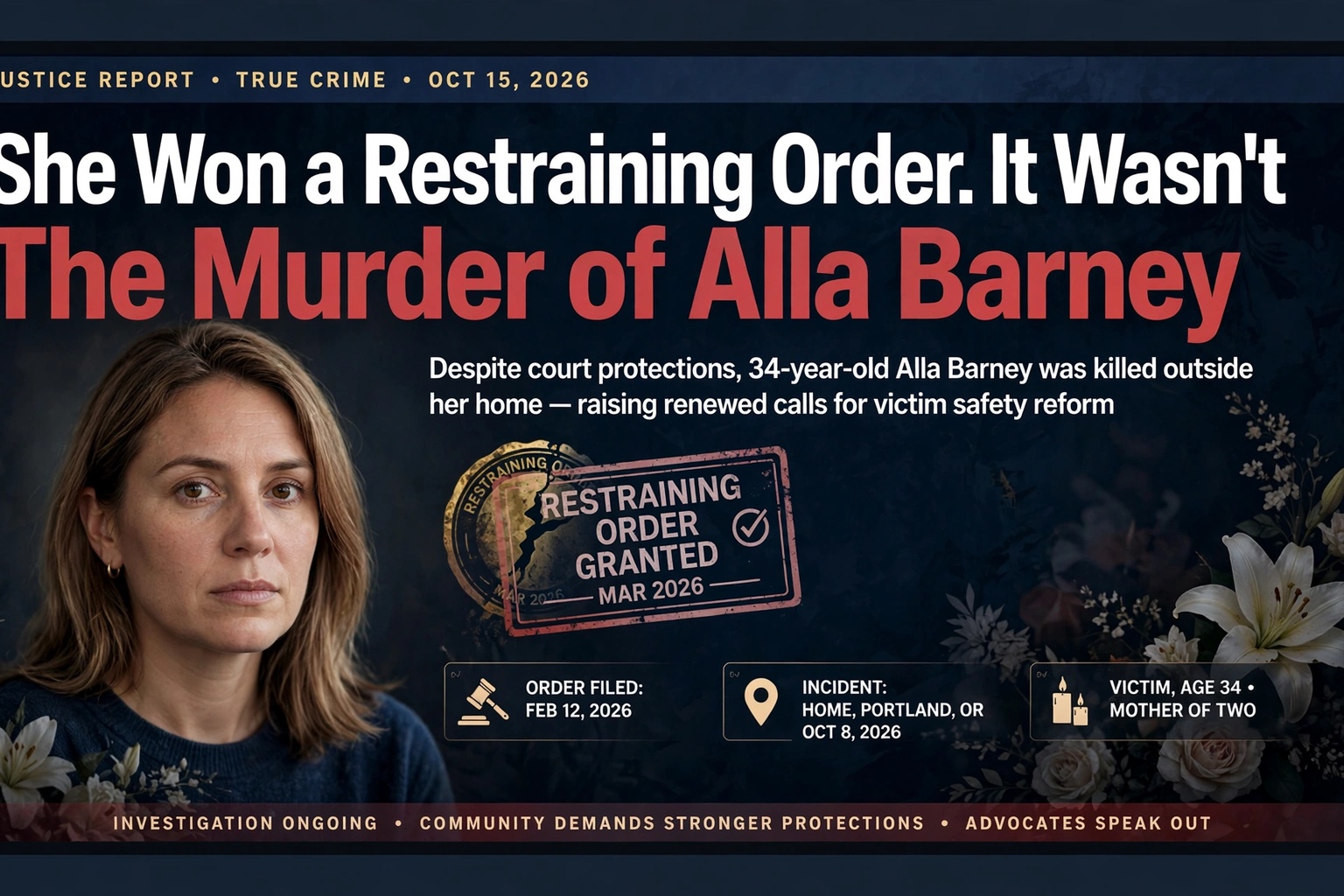
Alla Barney, a 26-year-old engineer from Ukraine, came to the United States as a mail-order bride. She married Lester Barney, a man more than twice her age, hoping for a better life. Within a few years, the marriage had collapsed into fear: Alla won a restraining order against her husband and was granted temporary custody of their young son.
On the afternoon of September 29, 2003, Alla walked out of a New Jersey courtroom holding a final domestic-violence restraining order against Lester. The order barred him from any contact with her and awarded her temporary custody of their four-year-old son, Danny, with Lester allowed parenting time. She had done everything the system told her to do.
Hours later, Lester went to Danny’s daycare in Mount Laurel. Around 5 p.m., he played with the boy on the playground for about twenty minutes, then went inside and told the daycare director he had lost custody of his son. When his cell phone rang, he left abruptly. He was waiting when Alla arrived to pick up Danny.
Lester Barney caught up with her in the daycare parking lot. He slashed her throat in front of their 4-year-old son, Daniel. Alla bled to death on the floor of her car. Lester fled with the boy and was captured after an AMBER Alert.
At trial, a jury heard seven days of evidence and found Lester Barney guilty of purposeful and knowing murder and of second-degree interference with custody. The court sentenced him to life in prison, with 85 percent of the term to be served before parole eligibility under New Jersey’s No Early Release Act, plus a consecutive four-year term for the custody offense. His appeals failed: the Appellate Division affirmed the conviction in 2007, the state Supreme Court declined review in 2008, and a federal court denied his habeas petition in 2018.
The case became one of the most cited examples in the U.S. Senate’s examination of the mail-order bride industry — a system in which women with limited English, limited money, and limited options were matched with American men with almost no background checks running the other direction. Testimony before the Senate Foreign Relations Committee on trafficking and bride abuses held up Alla’s murder as what happens when paper protections meet a determined abuser. Her story, alongside cases like the Blackwell courthouse killings, helped build the political case for the International Marriage Broker Regulation Act of 2005, which imposed background-check and disclosure requirements on the industry for the first time.
The vulnerability was structural, not personal. Women who arrive on fiancée or spousal visas often face a two-year conditional residency period tied to the marriage itself — leaving an abusive husband can mean risking deportation. Advocates have argued for decades that this design hands abusers a built-in threat: report me, and you lose your right to stay. Alla had cleared that hurdle and still could not get safe. Her case is why reformers keep insisting that the danger is not only in how these marriages begin, but in how hard the system makes them to leave.
Alla Barney did what the system tells women to do: she went to court, she got the order, she got custody. The system’s failure was not hers. Her story remains a reference point in discussions of how international matchmaking can concentrate vulnerability — and how paper protections mean little without enforcement.
Disclosure: The stories on Love Lies Abroad are based on publicly reported accounts. We are not stating these as facts — this is what was reported. If you are featured in a story and believe it is inaccurate, contact us and we will review it, correct it, or take it down.
Submit a correction, documentation, context, or a response for private editorial review. Contact the editorial desk.
Join the conversation
Load Facebook comments to read and reply using your Facebook account.