
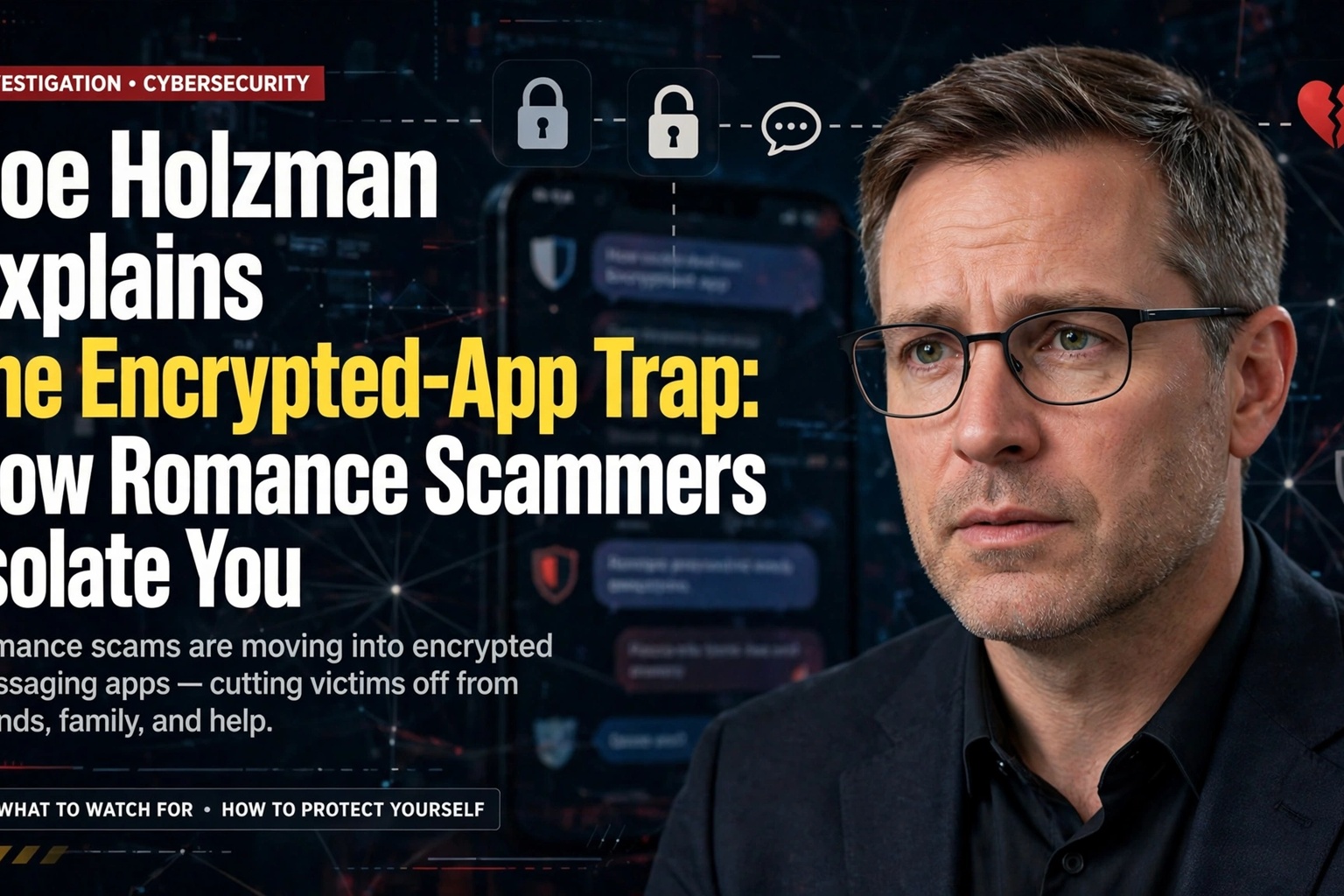
In the FBI Chicago field office’s romance scam public service announcement, Special Agent Joe Holzman walks through the playbook step by step — and one step matters more than the rest. Soon after the connection forms, Holzman explains, the scammer tries to move the conversation to another messaging app, usually an encrypted one, ‘to talk exclusively and securely.’
That move — off the dating site, onto WhatsApp or Telegram or plain text — is the moment the scam goes from fishing to farming. And it’s deliberate.
Why they need you off the platform
Dating apps and social platforms have fraud detection: automated systems that flag suspicious accounts, and reporting tools that let victims warn others. The Senate’s romance scam report found that scammers deliberately get victims to communicate off the application — by text or email — specifically to prevent the platform from detecting the fraudulent behavior.
Encrypted messaging adds a second layer of protection for the criminal: the conversation becomes harder for anyone else to see or intercept. ‘Exclusively and securely’ sounds romantic. Functionally, it means no witnesses.
What happens in the private channel
Once isolated, the script accelerates. Holzman’s PSA describes the arc: you try to meet in person but plans never work out. Suddenly they need money — for an ‘investment opportunity’ or a ‘medical emergency.’ They might ask you to mail gift cards. They promise repayment, but they never repay. They tell you your friends and family don’t ‘understand your relationship,’ and you become reliant on them for love. Then they cut off all contact, and you never hear from them again.
The FBI Chicago office’s written guidance backs up the video: go slow and ask questions. If you suspect a scam, stop all contact immediately. Never send money to someone you met online and haven’t met in person. Research their picture and profile with online search tools. Be careful what you post publicly, because scammers mine your social media to sharpen the con.
The rule of the platform
The FTC’s advice dovetails: scammers strike up the relationship on dating sites or social media, then push to email, call, or message off the platform. Treat the push to move as a screening test in reverse — they’re screening you for compliance.
A real person with real intentions doesn’t need you off the app in 48 hours. If a new match is urgent about going ‘somewhere more private,’ stay exactly where you are — and ask yourself who the privacy is really for.
The encrypted-app move is also your best early warning because it’s testable. A real person with genuine intentions doesn’t need you off the dating platform within days — the platform has messaging, calls, and video built in. The rush to ‘somewhere more private’ serves the scammer, not the romance: no fraud detection, no reporting trail, no witnesses. The FTC’s consumer guidance describes the same migration from the victim’s side — scammers strike up the relationship on dating sites or social media, then push to email, call, or message off the platform. Treat that push as the screening test it is. Stay on the platform, slow the pace, reverse-image-search the photos, and talk to someone you trust. Holzman’s PSA ends where every federal warning ends: if you suspect a scam, stop all contact immediately — and never send money to someone you haven’t met in person.
Disclosure: The stories on Love Lies Abroad are based on publicly reported accounts. We are not stating these as facts — this is what was reported. If you are featured in a story and believe it is inaccurate, contact us and we will review it, correct it, or take it down.
Submit a correction, documentation, context, or a response for private editorial review. Contact the editorial desk.
Join the conversation
Load Facebook comments to read and reply using your Facebook account.