
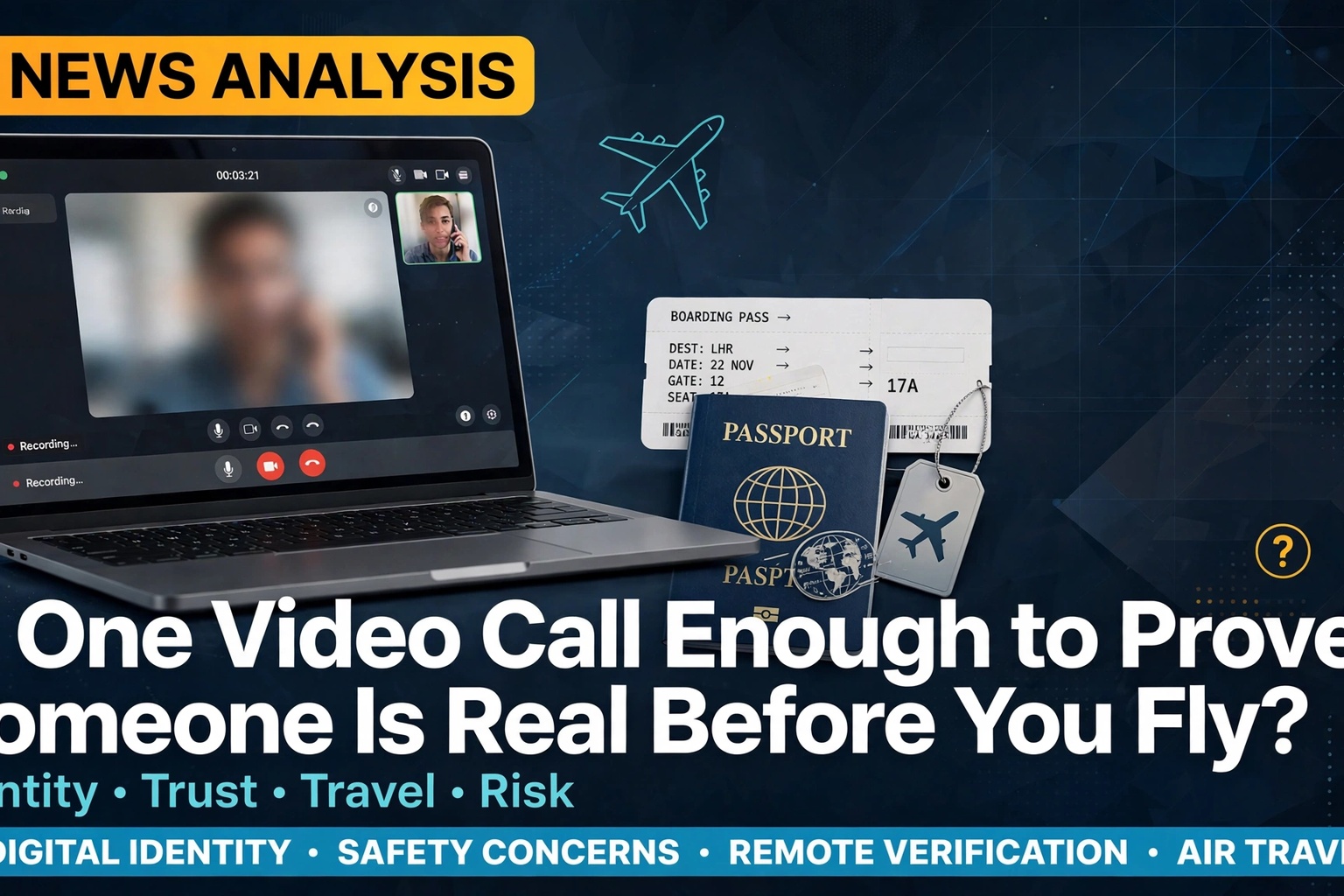
It’s the milestone every cross-border couple hits: the first video call. The voice matches the messages. The face matches the photos. Relief floods in — they’re real. But then the bigger question lands: is one call actually enough to stake a plane ticket on? The honest answer is no, and understanding why will change how you verify from here on.
What one call proves — and what it doesn’t
A single video call proves that a real human exists and is willing to appear on camera. That’s meaningful — it’s a filter that screens out the laziest deception. But it doesn’t prove the person is who they claim to be beyond that moment. It doesn’t prove their name, their job, their city, their marital status, or that the life described in months of messages belongs to the face on the screen. One call is a data point. Verification needs a pattern.
The verification pattern that works
Multiple calls, different contexts. A morning call from their kitchen, an evening walk, a quick call from their workplace at lunch. Real lives have texture — different lighting, background noise, interruptions. Someone performing a role struggles to sustain it across spontaneous contexts.
Spontaneity. Suggest a call right now, not tonight at eight. Not as a test to announce — just “hey, got five minutes?” A real person with a real life can usually manage an imperfect, unpolished five minutes. Someone who always needs to “get ready” or “find better wifi” before every single call is managing something.
Interaction with their world. Have they ever introduced you to a friend on a call? Shown you their neighborhood on a walk? Mentioned a coworker by name and then that coworker appears in a story later with consistent details? Fabricated lives are thin — they have a main character and no supporting cast.
Layer the call with independent checks
Video is one channel; add others. A social media presence with years of history, tagged photos from other real people, and consistent timelines is hard to fake well. A reverse image search on their profile photos (through Google Images or TinEye) takes thirty seconds and occasionally ends the conversation on the spot. None of these is conclusive alone — together, they form a picture that’s either coherent or it isn’t. Official pre-travel checklists stress doing your research before you go; apply that same diligence to the person, not just the place.
The timeline test
Here’s the question that quietly resolves most doubt: does the person’s story get more detailed over time, or does it loop? Real relationships accumulate specifics — the name of the difficult boss, the café with the bad wifi, the cousin’s wedding next month. Performances recycle the same five anecdotes. After a month of calls, you should know things about their Tuesday, not just their dreams.
When verification is “enough”
There’s no certificate at the end of this process — just a judgment call. You’re done when: you’ve had many spontaneous calls across contexts, their story has texture and a supporting cast, independent checks corroborate the basics, and nothing required you to explain away. If you’re still explaining things away, you’re not done. The principle is universal across official travel guidance: research first, then go. Canada’s travel.gc.ca portal and the UK’s per-country advice pages are both built for exactly that kind of homework — use them for the destination with the same seriousness you bring to vetting the person.
One video call is the beginning of trust, not the end of verification. Book the flight when the pattern holds, not when the first call feels good.
Disclosure: The stories on Love Lies Abroad are based on publicly reported accounts. We are not stating these as facts — this is what was reported. If you are featured in a story and believe it is inaccurate, contact us and we will review it, correct it, or take it down.
Submit a correction, documentation, context, or a response for private editorial review. Contact the editorial desk.
Join the conversation
Load Facebook comments to read and reply using your Facebook account.