
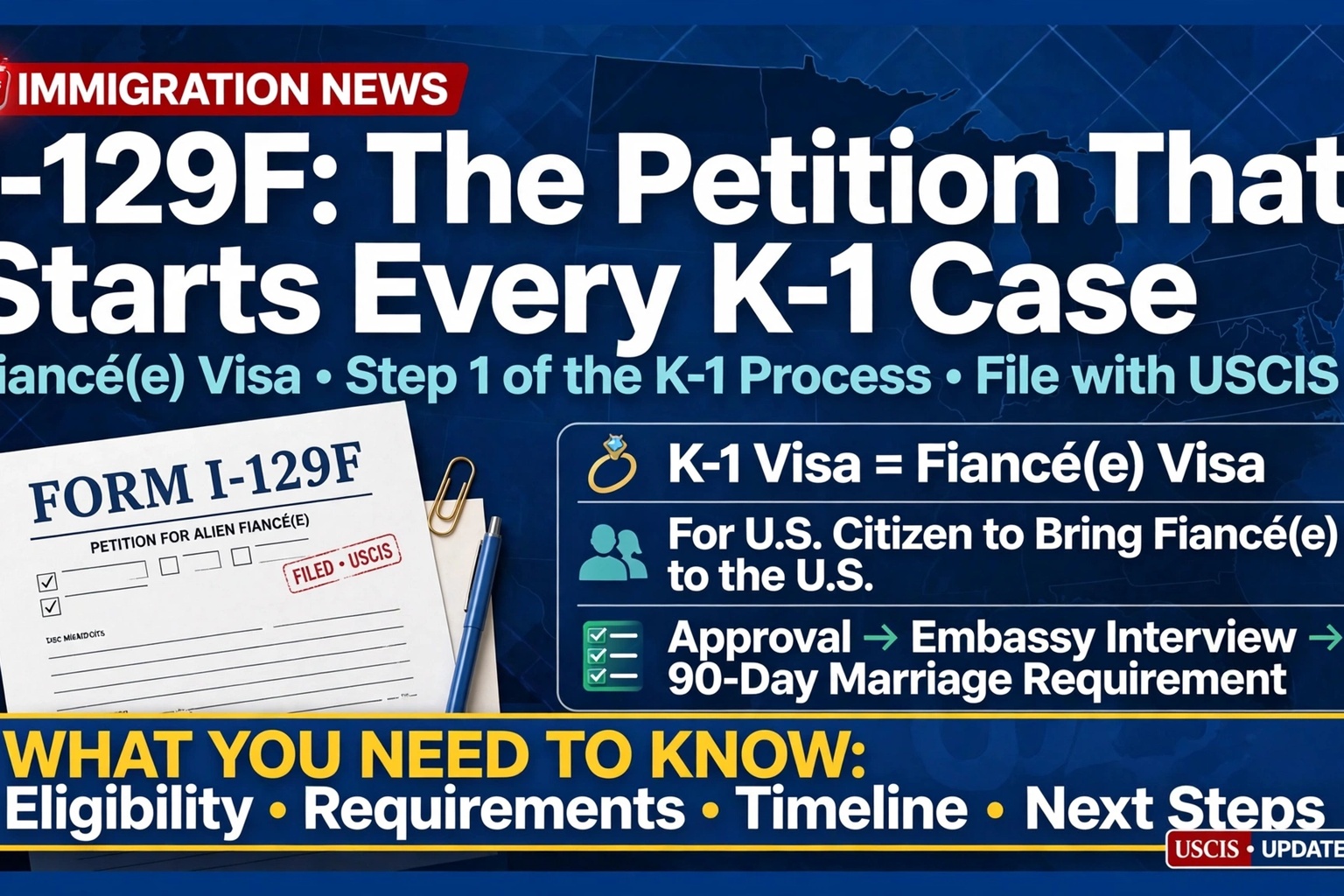
Before the interview, before the medical exam, before any embassy is involved, there is Form I-129F, Petition for Alien Fiance(e). This is the foundation document of every K-1 case, filed not by the foreign fiance(e) but by the U.S. citizen partner with U.S. Citizenship and Immigration Services. A weak I-129F echoes through every later stage, so it deserves more care than any other single filing in the process.
Who can file — and who cannot
Only a U.S. citizen can file Form I-129F. Lawful permanent residents cannot use the K-1 route at all; their path runs through marriage followed by an I-130 petition in the family preference system. Both the petitioner and the beneficiary must be legally free to marry — prior marriages ended by divorce, annulment, or death — with documentary proof such as divorce decrees or death certificates. Either party’s unresolved prior marriage will stall or kill the petition.
What goes into the petition package
A complete I-129F package typically includes proof of the petitioner’s U.S. citizenship (passport, birth certificate, or naturalization certificate), signed statements from both partners declaring intent to marry within 90 days of admission, passport-style photos of both people, evidence the couple met in person within the two years before filing, and proof that any prior marriages were legally terminated. Relationship evidence — photos together, travel records, message logs, boarding passes — supports the claim that the relationship is genuine. Organize it chronologically with a cover letter; officers review thousands of these, and clarity is a kindness that gets rewarded.
After filing: receipt, review, decision
USCIS issues a receipt notice (often called NOA1) confirming the case is in the system — keep it, since the receipt number is the key to every status check. An officer then reviews the petition. If evidence is thin or a requirement looks unmet, USCIS may issue a Request for Evidence, which pauses adjudication until the petitioner responds by the stated deadline. Approval arrives as a second notice (NOA2), and USCIS forwards the approved petition to the National Visa Center, which assigns a case number and sends it to the embassy or consulate. An approved petition is generally valid for four months, and the consular officer can revalidate it if processing runs long — a detail that matters when embassy backlogs stretch.
Fees, filing, and timing
The current filing fee is $675, and the form instructions specify where to file — follow them exactly, since misdirected filings are returned. Processing times fluctuate with workload and vary by service center; the only honest answer to “how long” is the USCIS case processing times tool checked for the I-129F. There is no premium processing for this petition, so there is no way to pay for speed. An RFE commonly adds months, which is why getting the initial package right is the fastest thing a petitioner can do.
This article is informational. Couples with prior denials, criminal history, or complicated marital histories should consider an immigration attorney before filing.
Keep the receipt notice and a complete copy of the filed package together; the receipt number unlocks every status check, and the copy is what you will reference when the National Visa Center or the embassy asks about the petition months later.
Sources: https://www.uscis.gov/i-129f https://www.uscis.gov/family/family-of-us-citizens/visas-for-fiancees-of-us-citizens
Disclosure: The stories on Love Lies Abroad are based on publicly reported accounts. We are not stating these as facts — this is what was reported. If you are featured in a story and believe it is inaccurate, contact us and we will review it, correct it, or take it down.
Submit a correction, documentation, context, or a response for private editorial review. Contact the editorial desk.
Join the conversation
Load Facebook comments to read and reply using your Facebook account.