
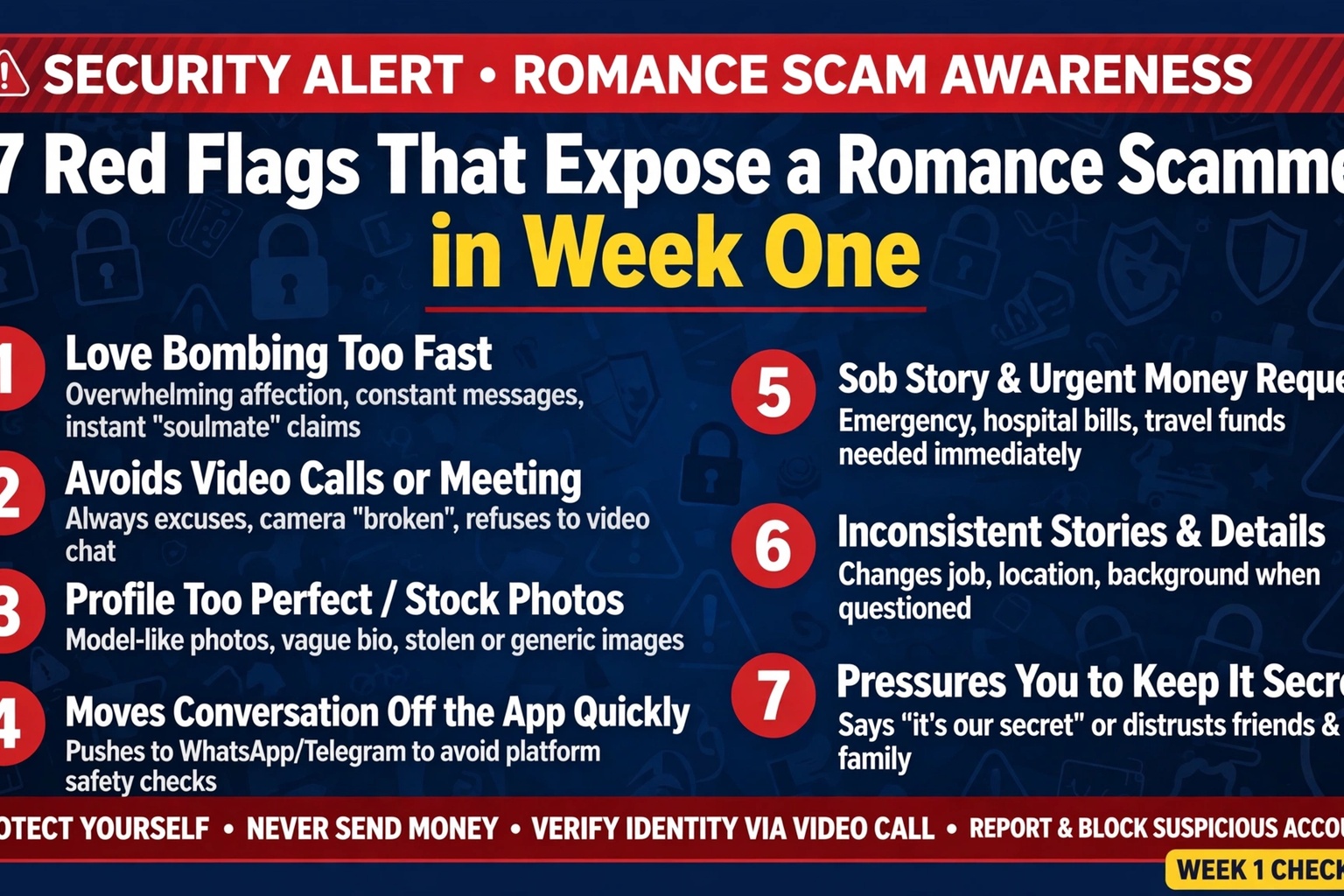
Most romance scam victims don’t realize what happened until the money is gone. But the FBI and FTC have published the warning signs so clearly that you can run the checklist in the first week — before the emotional investment makes the financial one feel inevitable. Here are seven.
1. They can’t meet — ever
The FTC’s number-one lie: scammers say they can’t meet you in person. Oil rig, military deployment, international business, stuck overseas. If every proposed meeting dissolves into an excuse, you’re not dating someone busy. You’re being managed.
2. The relationship moves off the platform fast
They want you on WhatsApp, Telegram, or text — away from the dating app’s fraud detection. The Senate’s romance scam report notes scammers deliberately move victims off the application so the platform can’t detect the fraudulent behavior. Urgency to go ‘private’ is a tactic, not intimacy.
3. Love comes at lightning speed
Professions of deep love within days. Talk of marriage within weeks. The FBI’s Los Angeles office flags ‘an individual professing love quickly’ as a notable red flag. Real affection needs real time.
4. Their story is a tragedy reel
Sick mother. Business collapse. Stuck in a foreign country. A life that reads like a soap opera is designed to do one thing: make the eventual money request feel like a rescue mission instead of a transaction.
5. They isolate you
‘Don’t tell your friends, they wouldn’t understand.’ ‘Your family is just jealous.’ The FBI warns scammers try to cut you off from the people who’d spot the scam — because a second opinion is their worst enemy.
6. Money comes up — and there’s always a reason it’s urgent
Medical emergency. Plane ticket. Visa fee. Legal trouble. The FTC lists these as the standard scripts. And notice the payment methods they demand: wire transfers, gift cards with the PIN codes, money transfer apps, cryptocurrency. The FTC is explicit — they want your money in a way that makes it hard for you to get it back.
7. They dodge verification
Won’t video call. The camera is ‘broken.’ Photos look like a model’s portfolio. The FBI’s Chicago office advises researching the person’s picture and profile with online search tools — a reverse image search takes thirty seconds and has ended countless scams before they started.
The FTC’s bottom line covers all seven: never send money or gifts to a sweetheart you haven’t met in person. Run the checklist early, trust the results, and remember — the person pressuring you to ignore red flags is the biggest red flag of all.
One more check worth running in that first week: show the profile to someone whose judgment you trust before any money conversation starts. The FTC specifically recommends asking whether friends or family are concerned about your new love interest — scammers push for secrecy precisely because an outside perspective breaks the spell. And if any of the seven flags above are waving, don’t wait for an eighth: stop communicating, save the messages and photos as evidence, and report the profile to the dating platform plus the FTC at ReportFraud.ftc.gov and the FBI at ic3.gov. The checklist only works if you act on what it tells you.
Disclosure: The stories on Love Lies Abroad are based on publicly reported accounts. We are not stating these as facts — this is what was reported. If you are featured in a story and believe it is inaccurate, contact us and we will review it, correct it, or take it down.
Submit a correction, documentation, context, or a response for private editorial review. Contact the editorial desk.
Join the conversation
Load Facebook comments to read and reply using your Facebook account.