
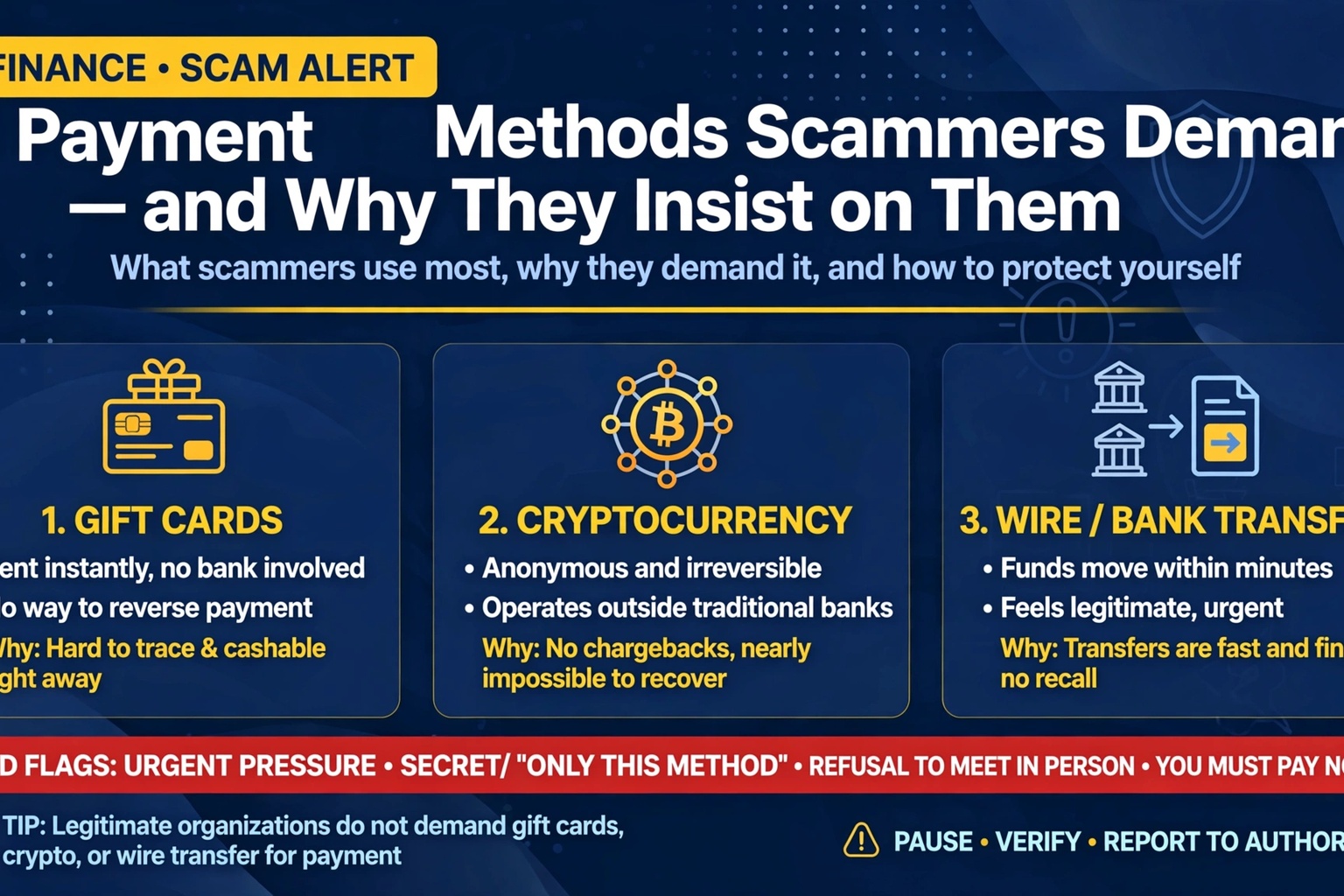
Every romance scam ends the same way: with instructions. Not a request — instructions. Wire it here. Buy the cards and send the codes. Transfer the crypto to this wallet. The specificity is the tell. Legitimate people in genuine emergencies accept whatever help you can offer. Scammers accept only the payment methods that protect them, and the FTC has catalogued the big three.
1. Wire transfers (Western Union, MoneyGram)
The classic. The FTC lists wire transfers first among scammer-demanded payment methods, and for good reason: once a wire is picked up, it’s effectively gone. Wires move fast, cross borders easily, and offer almost no fraud reversal compared to credit cards or bank transfers. The recipient can collect cash with a fake ID and disappear. By the time you realize the emergency was fiction, the money has been collected, split, and laundered.
2. Gift cards (Amazon, Google Play, iTunes, Steam)
The FTC specifically names these four brands — because scammers name them. Victims are told to buy the cards and hand over the PIN codes. The balances drain in minutes and get resold on secondary markets. Gift cards are the perfect scam instrument: sold everywhere, associated with innocent occasions, denominated small enough that each purchase feels manageable while the total climbs into the thousands. No legitimate hospital, lawyer, soldier, or customs official has ever needed to be paid in iTunes credit.
3. Cryptocurrency
The modern favorite. The FTC lists crypto transfers alongside wires and gift cards, and the FBI’s Los Angeles office flags the broader pattern of scammers demanding irreversible payment. Crypto offers the scammer everything: speed, borderlessness, pseudonymity, and transactions that can’t be reversed by any bank. Once your coins hit the scammer’s wallet, they’re tumbled through mixers and gone.
Why they insist — and why you shouldn’t
Notice what the three methods share: they’re fast, hard to reverse, and light on identity verification. Now notice what’s missing: credit cards (chargebacks exist), checks (they bounce and leave trails), bank transfers (banks ask questions). The scammer’s payment menu is a list of methods with no consumer protection. That’s not a coincidence — it’s the entire business model.
The insistence itself is the red flag. A real person in a real crisis says ‘anything helps.’ A scammer says ‘it has to be gift cards’ or ‘only crypto works from here’ — because the method is the scam. The FTC’s rule is the complete defense: never send money or gifts to a sweetheart you haven’t met in person. And if someone you met online is giving you payment instructions instead of accepting your help, stop communicating and report it at ReportFraud.ftc.gov.
If you’ve already paid through one of these three channels, act in this order: contact the payment company or your bank immediately and tell them you paid a scammer — the FTC’s victim guidance says to ask directly for a refund, because wire recalls and card reversals are time-sensitive. Then report to the FTC at ReportFraud.ftc.gov and the FBI at ic3.gov, and notify the platform where you met the scammer. Save every message, receipt, wallet address, and tracking number first; investigators build cases from exactly this material. And going forward, memorize the payment menu as a diagnostic: anyone you met online who will only accept wires, gift cards, or crypto is telling you, in the clearest possible terms, that the money isn’t meant to come back. Believe them — and keep yours.
Disclosure: The stories on Love Lies Abroad are based on publicly reported accounts. We are not stating these as facts — this is what was reported. If you are featured in a story and believe it is inaccurate, contact us and we will review it, correct it, or take it down.
Submit a correction, documentation, context, or a response for private editorial review. Contact the editorial desk.
Join the conversation
Load Facebook comments to read and reply using your Facebook account.