
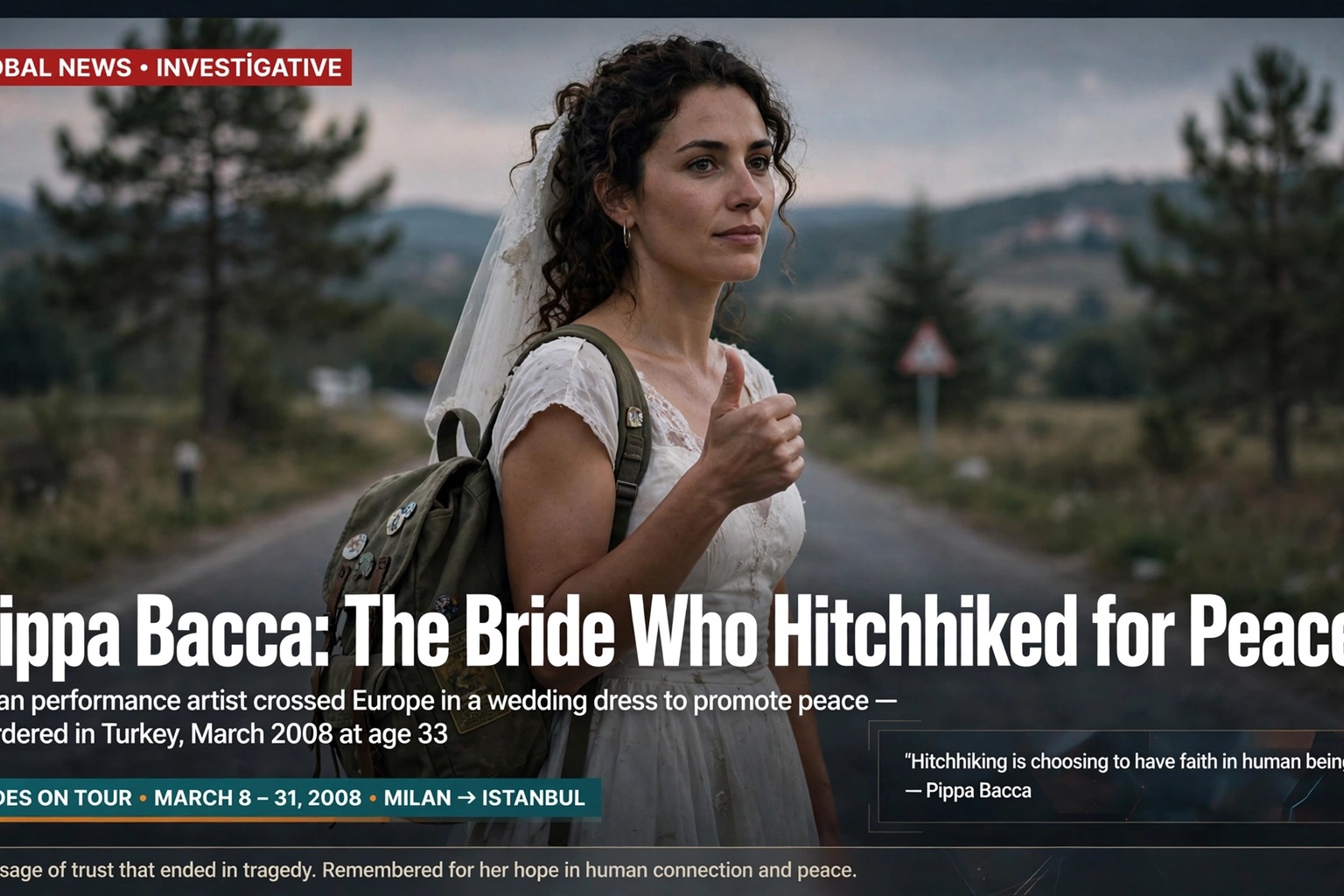
Giuseppina Pasqualino di Marineo — known as Pippa Bacca — was a 33-year-old Italian performance artist with a radical idea: that trust between strangers could build peace. On March 8, 2008, International Women’s Day, she and fellow artist Silvia Moro set out from Milan on a project called ‘Brides on Tour.’ Wearing only white wedding dresses, they would hitchhike from Italy to Jerusalem, through eleven countries scarred by war, as symbolic brides marrying peoples together. Their motto: hitchhiking is choosing to have faith in human beings. Twenty-four days later, Pippa was dead.
The two women traveled separately, meeting along the way. They crossed Slovenia, Croatia, Bosnia, and Bulgaria, photographing the drivers who gave them rides and washing the feet of the midwives they met — small rituals of gratitude and trust. They arrived in Turkey on March 20. In Istanbul, they decided to split up and reunite later in Lebanon. It was the last decision Pippa ever made.
On March 31, 2008, Pippa got into a vehicle on the outskirts of Istanbul. That afternoon she used her credit card for the last time. When she didn’t reappear, Turkish police launched a search. On April 11, a man in custody led them to her body, hidden in bushes in a forest near Gebze, about 65 kilometers from the city. She had been raped and strangled.
The killer gave himself away through her phone: Murat Karatas, 38, a father of two with a prior theft record, had turned the phone on using his own SIM card. He confessed and was sentenced to life in prison. Turkey’s newspapers ran front pages of national shame; the prime minister expressed disgust; activists gathered holding her picture when her body was flown home.
Silvia Moro completed the journey alone. Pippa’s camera footage was later recovered and became the basis of documentary films about her life and final trip. Her premise — that faith in people is rewarded — was the most beautiful and most fragile idea an artist could test with her own body. The world she wanted to prove trustworthy was the one that killed her. But the wedding dress, stained with the road as she had planned, remains one of contemporary art’s most devastating images: a bride who set out to marry the world, murdered by it instead.
Disclosure: The stories on Love Lies Abroad are based on publicly reported accounts. We are not stating these as facts — this is what was reported. If you are featured in a story and believe it is inaccurate, contact us and we will review it, correct it, or take it down.
Submit a correction, documentation, context, or a response for private editorial review. Contact the editorial desk.
Join the conversation
Load Facebook comments to read and reply using your Facebook account.