
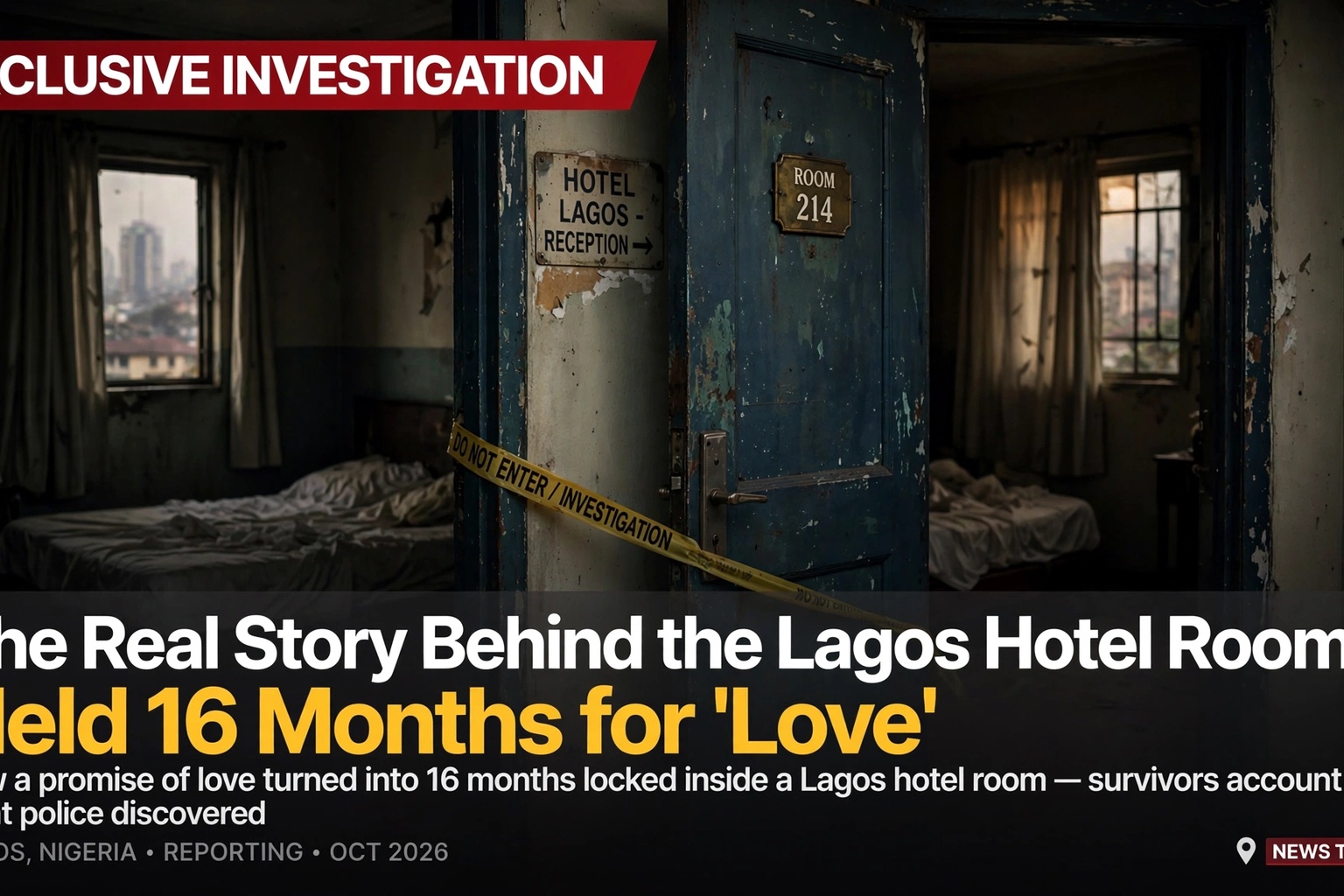
In February 2019, a 46-year-old retired civil servant from Washington, D.C., boarded a flight to Nigeria. She had met Chukwuebuka Obiaku, 34, on Facebook. He promised marriage. In May 2019, they married. Then the marriage became a cage.
For 16 months, she was held against her will in a hotel room in Lagos. According to Nigerian police, Obiaku took control of her credit and debit cards, her bank accounts, and her monthly retirement benefits — draining $48,000 over 15 months. He used her identity as a front to defraud her associates and other foreign contacts. She arrived for love. She became his asset.
How She Got Out
Police rescued her after a tip from what they called a “civic-minded” individual. Officers raided the hotel in the Meran area of Lagos state and freed her. Obiaku was arrested and faced cybercrime charges. She had been held for over a year before anyone outside that room knew the full picture.
Her case was not isolated. Just a month earlier, Nigerian police had rescued a Filipina woman — Irene Torento Panas — who had been lured to Nigeria by a Facebook romance and held six months against her will. Same method, same trap, different victim.
The Real Story Behind the Romance
What makes this case chilling is how ordinary the beginning was: Facebook messages, affection, a marriage proposal, a flight. Nothing in the opening chapters looked like a crime. The control came after arrival — gradually, then completely. Financial control first (the cards, the accounts), then physical control (the hotel room), then isolation (cut off from everyone who could help).
This is the anatomy investigators describe again and again: the trap is not the trip, it is the dependence built after landing. No independent money. No independent lodging. No one at home expecting a call.
The Lesson
Break the dependence chain before you fly and the trap cannot close: your own hotel room booked in your name. Your own bank access nobody else touches. A return ticket you control. Daily check-ins with someone home who knows the escalation plan. An embassy registration so your government knows you are in the country.
She survived 16 months in that room. The real story is not just what he did — it is how preventable the cage was, one independent arrangement at a time.
Marriage as a Weapon
One detail deserves emphasis: they married. In May 2019, three months after she arrived, Obiaku married her — not out of love, but as an instrument of control. Marriage created paperwork, expectations, and social pressure that made it harder for her to define what was happening as captivity. It also gave him cover: to outsiders, they were a couple, not a captor and a victim.
This is a pattern investigators flag repeatedly: formal commitment — marriage, engagement, joint accounts — used as a leash rather than a bond. A rushed marriage to someone you met online, in their country, far from everyone you know, is not romance. It is a legal structure built around you before you understand the jurisdiction you are in. Never marry abroad under pressure, in isolation, or on a timeline you did not choose.
Sources
- BBC News — Romance scam: US woman freed after year as hostage in Nigeria
- BusinessGhana — Romance scam: US woman freed after year as hostage in Nigeria
Disclosure: The stories on Love Lies Abroad are based on publicly reported accounts. We are not stating these as facts — this is what was reported. If you are featured in a story and believe it is inaccurate, contact us and we will review it, correct it, or take it down.
Submit a correction, documentation, context, or a response for private editorial review. Contact the editorial desk.
Join the conversation
Load Facebook comments to read and reply using your Facebook account.