
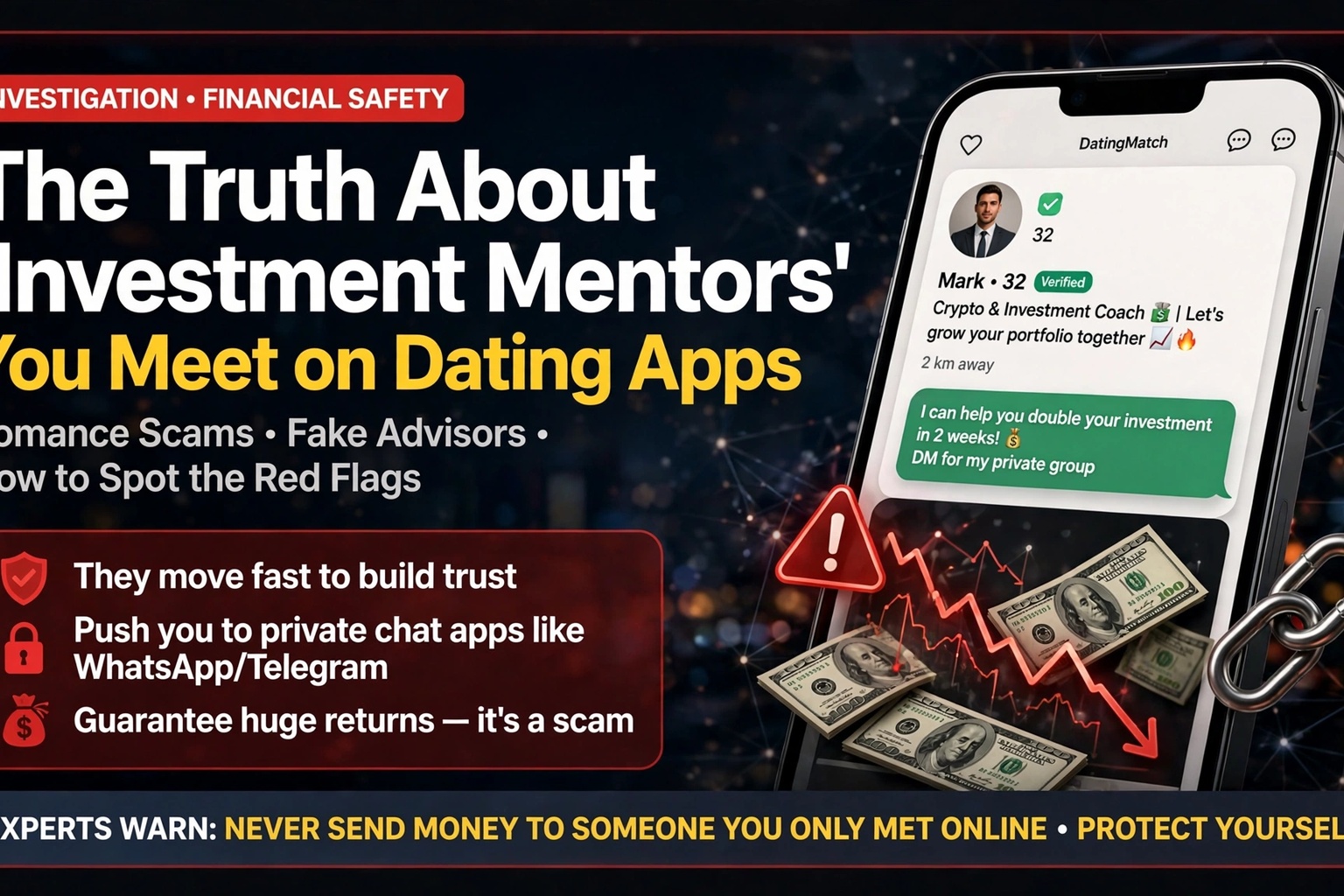
She wasn’t looking for financial advice. She was looking for love — and she found someone who offered both. He was charming, successful, generous with his time. And he happened to be brilliant at crypto trading. ‘I can teach you,’ he said. ‘Just start small.’ Six months later, her ‘investment account’ showed six figures in profit. Then she tried to withdraw, and the mentor, the money, and the romance all evaporated on the same day.
The real story behind the ‘investment mentor’ is that the mentorship is the romance scam — upgraded for the crypto era.
The mentor playbook
The Commodity Futures Trading Commission describes the pattern with clinical precision: you invest a small amount and it quickly returns big profits, just like your new friend said it would. Convinced, you invest more — even emptying retirement savings, borrowing against your house, or borrowing from others. Your account keeps climbing. Your mentor keeps encouraging you.
Then the trap springs. The CFTC explains: mention withdrawing and the mentor tries to convince you it would be a big mistake, or gets angry. There may be threats or blackmail attempts using compromising photos. When you try to withdraw, suddenly there are technical problems, or undisclosed taxes and fees payable out of pocket first. Or your requests are simply ignored. The trading site, your ‘friend,’ and the profits are all fake.
The Senate’s romance scam report gives this scheme its industry name — pig butchering — and describes it as both a romance and investment scam where the scammer forms a relationship, gradually lures the victim into crypto contributions, and disappears once the sum is significant. The FBI and Interpol have warned these are run by transnational organized crime groups.
Why the mentor angle works
It works because it flatters. Being offered mentorship feels like being chosen — you’re not a mark, you’re a protégé. It also reframes the money: you’re not ‘sending money to a stranger,’ you’re ‘investing.’ That single word disarms every financial instinct, because investing is something smart people do.
And the fake platform does the rest. Real-looking dashboards, real-time charts, customer support that answers — the stagecraft is professional because the returns are enormous. In April 2023, the Justice Department seized over $112 million linked to crypto investment schemes, a fraction of reported losses.
The truth in one rule
The CFTC’s guidance is direct: don’t trade or give money to people you only know online. Don’t trade in markets you don’t fully understand. Research any person or firm before you trade — and don’t trust testimonials on the platform itself. The FTC’s rule covers the romance half: never send money to a sweetheart you haven’t met in person.
A real mentor doesn’t find you on a dating app. A real investment doesn’t require secrecy from your family. And real profits don’t vanish when you try to collect them. If your ‘mentor’ came with a romance attached, you don’t have an advisor — you have a script, and the only profitable move is to stop sending money and report it.
Disclosure: The stories on Love Lies Abroad are based on publicly reported accounts. We are not stating these as facts — this is what was reported. If you are featured in a story and believe it is inaccurate, contact us and we will review it, correct it, or take it down.
Submit a correction, documentation, context, or a response for private editorial review. Contact the editorial desk.
Join the conversation
Load Facebook comments to read and reply using your Facebook account.