
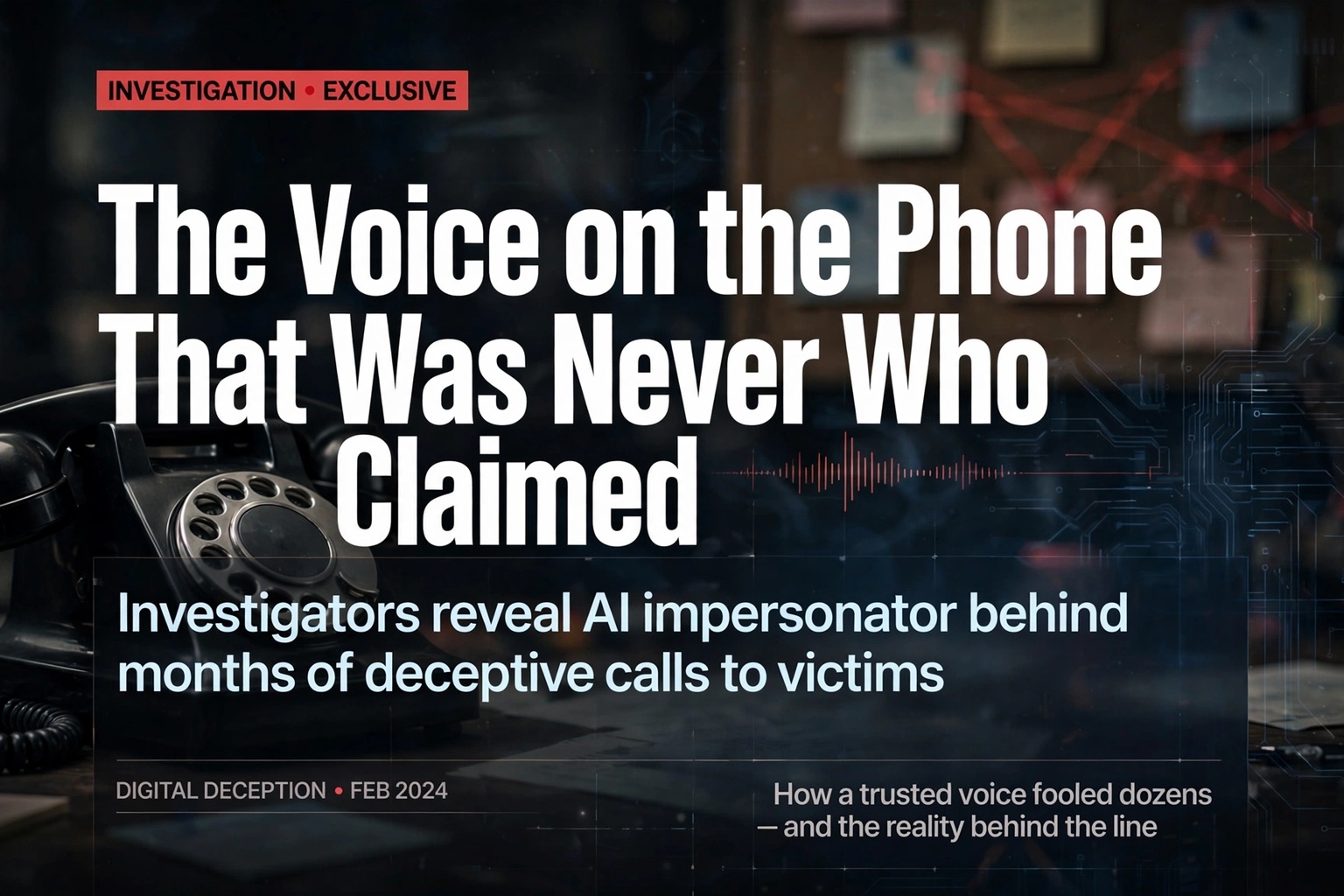
She never saw his face — but she heard his voice every night for two months. Warm, attentive, funny. He’d call after his ‘shift,’ tell her about his day, ask about hers. The voice felt real in a way photos never could. You can’t fake a voice, she thought. You can’t fake that kind of presence.
She was wrong about the first part, and the second part was the whole con. The voice on the phone was never who he claimed to be — and in today’s scam landscape, it might not have been a ‘he’ at all.
The oldest trick in the newest technology
Phone calls have always been a scammer’s trust accelerator. The FTC describes how romance scammers strike up relationships through constant contact — talking or chatting several times a day to build trust before the money request. A voice makes the fiction feel human in a way text can’t. It answers questions in real time. It laughs at your jokes. It says your name like it means it.
But the Senate’s romance scam report warns that these schemes have grown increasingly sophisticated with the rise of AI tools. Voice cloning — AI systems that can replicate someone’s voice from seconds of audio — has turned the phone call from a verification method into another attack surface. The warm voice on the line might be synthesized, and the ‘bad connection’ that explains the occasional robotic glitch might be the only honest thing about the call.
Why the voice works
Humans are wired to trust voices. We evolved to read sincerity in tone long before we could read at all, and scammers — now armed with AI — exploit that ancient wiring. A victim who would never wire money to a text bubble will wire it to a voice that ‘cried’ on the phone about a sick mother.
The FBI’s Chicago office lists the standard defenses, and they apply to voices too: go slow and ask questions. If you suspect a scam, stop all contact immediately. Be cautious about sending money to someone you’ve never met in person. Research the person’s picture and profile with online search tools.
Unmasking the voice
Here’s the mystery’s solution: a voice is not an identity. Ask for a live video call with unscripted interaction — something a recording or a real-time filter struggles to fake. Verify the person through independent channels: their workplace, their story’s details, the job-plus-‘scammer’ search the FTC recommends. And apply the agency’s standing rule, which no voice can override: never send money or gifts to a sweetheart you haven’t met in person.
The voice felt real because it was designed to. The person behind it was never who he claimed — and the moment you stop trusting the voice and start verifying the identity, the mystery ends.
The voice scam has one more layer worth naming: it inverts the normal trust hierarchy. We’ve been trained — by every consumer guide including the FTC’s — to verify through live interaction. But when the live interaction itself can be synthesized, the verification has to move one level deeper: verify the identity, not the performance. Ask for unscripted video. Check the story’s facts independently. Search the name, the photos, the job plus ‘scammer.’ Talk to someone you trust. The FBI’s Chicago guidance — go slow, ask questions, stop contact at the first suspicion, never send money to someone you haven’t met in person — was written for exactly this world, where every sense can be spoofed except independent verification. The voice on the phone felt like proof. Proof is what survives checking.
Disclosure: The stories on Love Lies Abroad are based on publicly reported accounts. We are not stating these as facts — this is what was reported. If you are featured in a story and believe it is inaccurate, contact us and we will review it, correct it, or take it down.
Submit a correction, documentation, context, or a response for private editorial review. Contact the editorial desk.
Join the conversation
Load Facebook comments to read and reply using your Facebook account.