
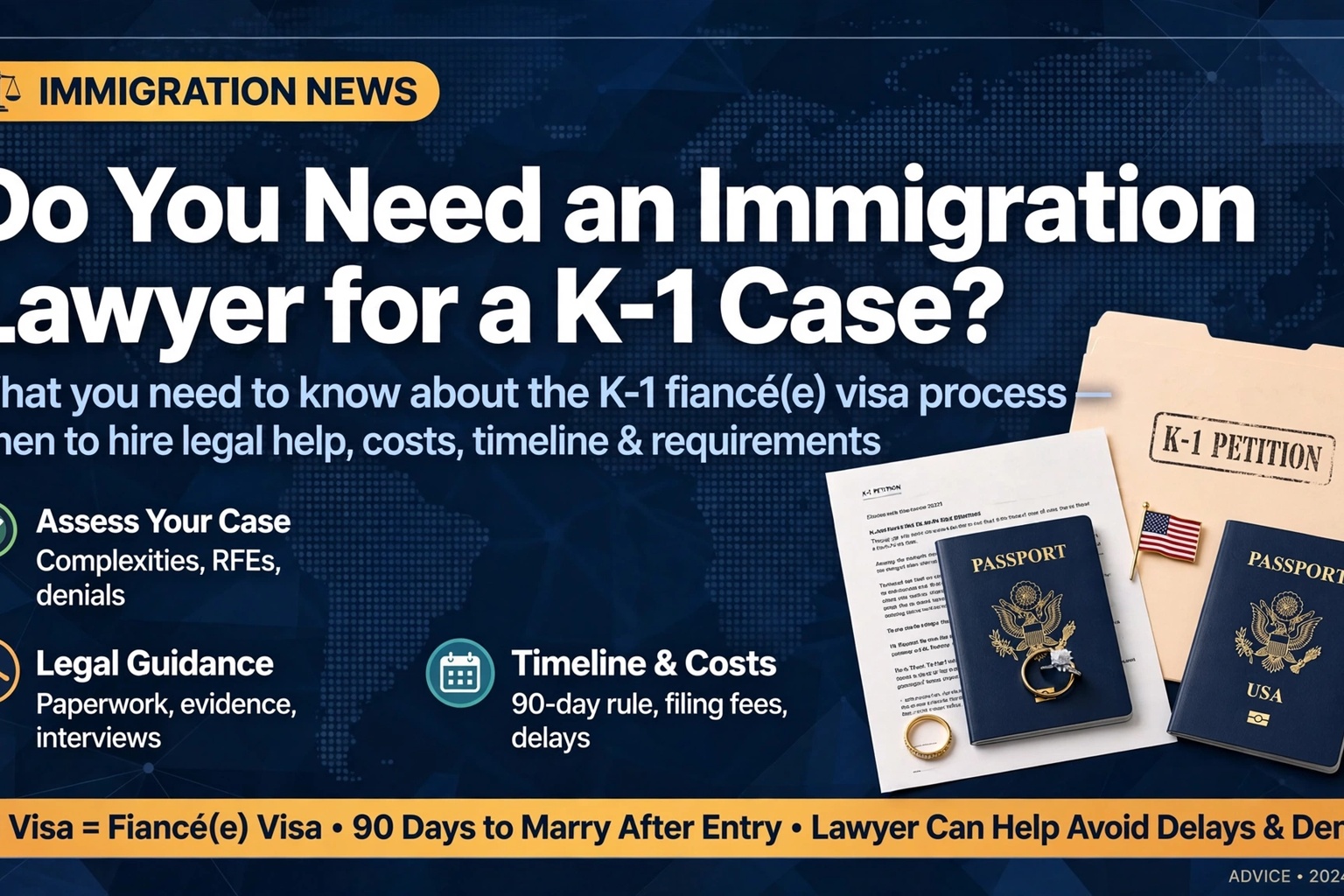
Thousands of couples complete the K-1 process without a lawyer, and thousands more wish they had hired one earlier. Forums treat the question as tribal — DIY pride versus attorney caution — but the honest answer is neither. Whether you need counsel depends on your facts, and knowing which facts change the answer is the whole game.
When careful DIY is reasonable
A straightforward case is genuinely manageable without counsel for organized couples willing to read instructions carefully: a U.S. citizen petitioner, no prior marriages or cleanly documented divorces on both sides, no criminal history, no prior immigration violations, a clear in-person meeting history inside the two-year window, and financials that comfortably meet the I-134 threshold. The forms are public, the fee schedule is published, and USCIS and State Department guidance covers the standard path well. Success here comes from completeness and consistency, not legal creativity.
When a lawyer earns the fee
Bring counsel in when any of these appear: a prior visa denial or refusal on either side, any overstay or other immigration violation, criminal history for petitioner or beneficiary, a prior I-129F filing (IMBRA waiver territory), an Adam Walsh Act issue for the petitioner, a request for evidence questioning the relationship’s bona fides rather than a missing document, a 221(g) refusal that has aged into months of administrative processing, or any need for a waiver of inadmissibility. These are the cases where a misstep compounds — a bad RFE response, a second blind filing, an interview answer that creates a fraud issue — and where the cost of the mistake dwarfs the cost of the counsel.
What a good lawyer actually does
Expect evidence strategy, not just form-filling: which documents prove the meeting requirement most efficiently, how to frame a waiver request, how to prepare for an interview where credibility is in doubt, how to respond to government correspondence without creating new problems, and when to escalate a stalled case versus when to wait. Flat-fee K-1 packages are common in the market; understand exactly which stages the fee covers, since the petition, the interview, and the adjustment of status are often priced as separate engagements. Ask what is included in writing.
Red flags when hiring
Avoid anyone guaranteeing approval or quoting timelines as promises — no lawyer controls USCIS adjudication or a consular officer’s decision, and guarantees are an ethical violation in most states. Verify licensure through the state bar. Be cautious of notario or consultant services for anything beyond form preparation in straightforward cases; only licensed attorneys and accredited representatives may give legal advice or represent you before USCIS. And be skeptical of fees dramatically below market — in immigration practice, as elsewhere, you usually get what you pay for.
The bottom line
The K-1 process rewards preparation more than credentials — but it punishes overconfidence in complicated cases without mercy. Assess your facts honestly against the list above, and when in doubt, pay for an initial consultation; it is the cheapest risk assessment in the process. This article is general information, not legal advice. For advice about your situation, consult a licensed immigration attorney.
Sources: https://www.uscis.gov/i-129f https://www.uscis.gov/family/family-of-us-citizens/visas-for-fiancees-of-us-citizens
Disclosure: The stories on Love Lies Abroad are based on publicly reported accounts. We are not stating these as facts — this is what was reported. If you are featured in a story and believe it is inaccurate, contact us and we will review it, correct it, or take it down.
Submit a correction, documentation, context, or a response for private editorial review. Contact the editorial desk.
Join the conversation
Load Facebook comments to read and reply using your Facebook account.