
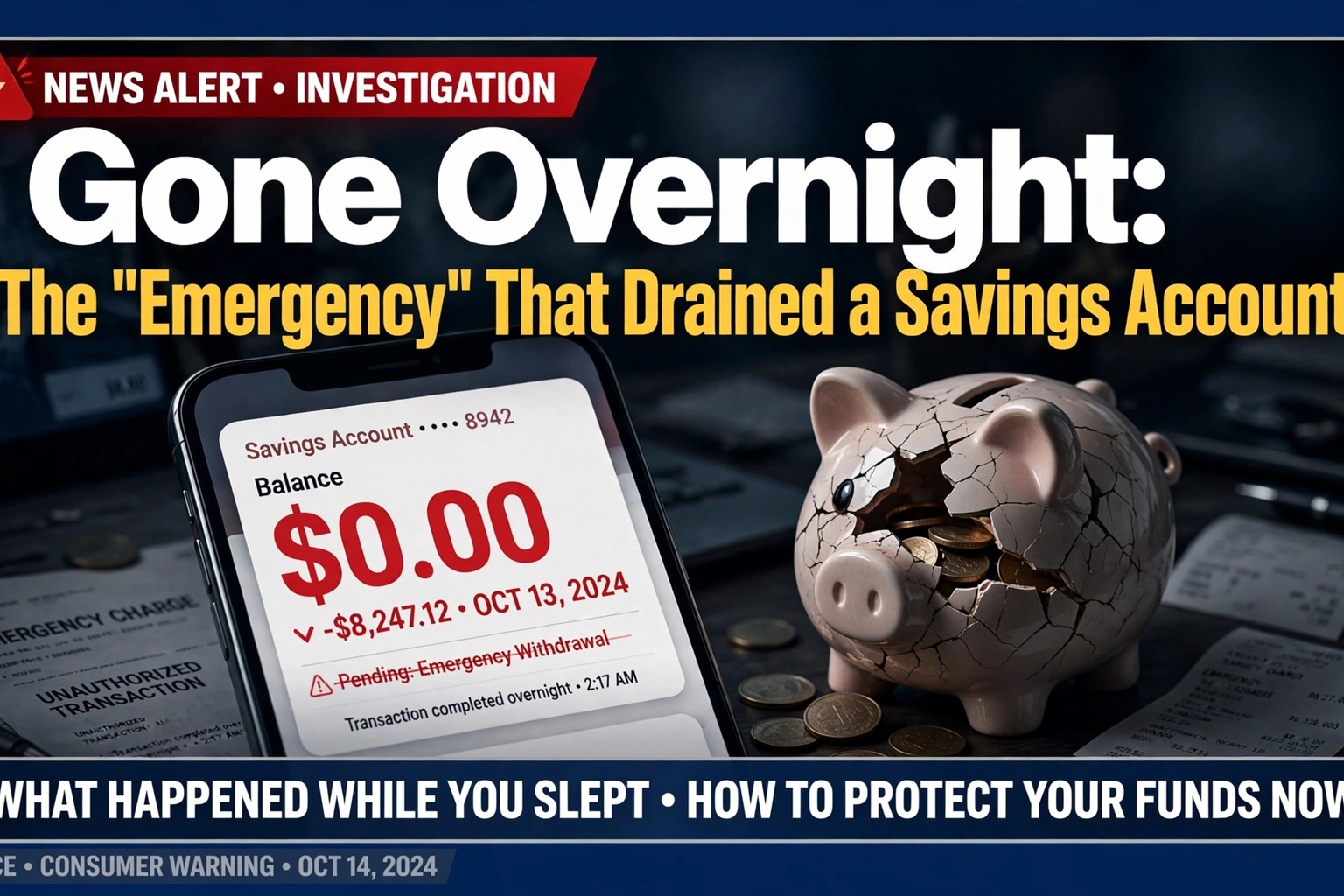
The message arrived at 11 p.m.: a crisis, overseas, and only you can help. A hospital demanding payment before surgery. A lawyer needing a retainer by morning. A customs officer holding a bag of ‘equipment’ until a fee clears. The amount was specific. The deadline was hours away. And the person begging was someone you’d come to love.
By sunrise the money was wired. By the weekend the profile was gone. The emergency — the surgery, the lawyer, the customs hold — had never existed. Neither, it turned out, had the person. What remained was an empty savings account and a mystery with no one left to answer questions.
The anatomy of the manufactured emergency
The FTC catalogs these scripts as standard issue: once scammers gain your trust, they ask for help paying medical expenses (for them or a family member), buying their ticket to visit you, paying for their visa, or helping them pay fees to get out of trouble. The emergency is always urgent, always just out of reach, and always solvable with your money — right now.
The FBI’s Los Angeles office describes the same beat: scammers claim to live or work far away to avoid meeting in person, and eventually request money ‘for a medical emergency, an unexpected legal fee, or some other false purpose.’ The details change. The structure never does: crisis, deadline, you.
Why urgency is the weapon
Emergencies don’t give you time to think — that’s the point. A victim who has 48 hours might reverse-image-search a photo, call a friend, or notice the story doesn’t add up. A victim who has four hours wires the money. The deadline is doing the scammer’s most important work: shutting down your judgment.
And the payment method seals it. The FTC warns that scammers demand wire transfers, gift cards with the PIN codes, money transfer apps, or cryptocurrency — every channel chosen because the money can’t be pulled back once it’s sent. By the time the ‘hospital’ or ‘lawyer’ stops answering, there’s nothing to recover and no one to find.
Solving the mystery before it starts
Real emergencies have verifiable facts: a hospital with a name and a phone number you can call independently, a lawyer with a bar registration, a person whose identity survives a reverse image search. Scam emergencies have none of these — only urgency and a demand for irreversible payment.
The FBI’s red-flag list is the diagnostic: love professed quickly, isolation from friends and family, visit plans that always collapse because of ‘some emergency.’ If you haven’t met the person after a few months, the FBI says, you have good reason to be suspicious. And the FTC’s rule is the circuit breaker for every manufactured crisis: never send money or gifts to a sweetheart you haven’t met in person. No emergency — real or staged — overrides it.
If the emergency already got your money, the next hours matter more than the last ones. The FTC’s guidance for victims is explicit: if you paid with a gift card, wire transfer, card, or crypto, contact the company or your bank right away, tell them you paid a scammer, and ask for a refund. Then report to the FTC at ReportFraud.ftc.gov and the FBI at ic3.gov, and notify the platform where you met them. Speed is everything — wire recalls, card chargebacks, and crypto tracing all decay with time. And tell someone you trust what happened, not just for the emotional support but because shame is the scammer’s final tool: the FBI openly acknowledges victims avoid reporting because the crime feels embarrassing, which is exactly why the official numbers undercount the real toll. The emergency was staged. Your response doesn’t have to be.
Disclosure: The stories on Love Lies Abroad are based on publicly reported accounts. We are not stating these as facts — this is what was reported. If you are featured in a story and believe it is inaccurate, contact us and we will review it, correct it, or take it down.
Submit a correction, documentation, context, or a response for private editorial review. Contact the editorial desk.
Join the conversation
Load Facebook comments to read and reply using your Facebook account.