
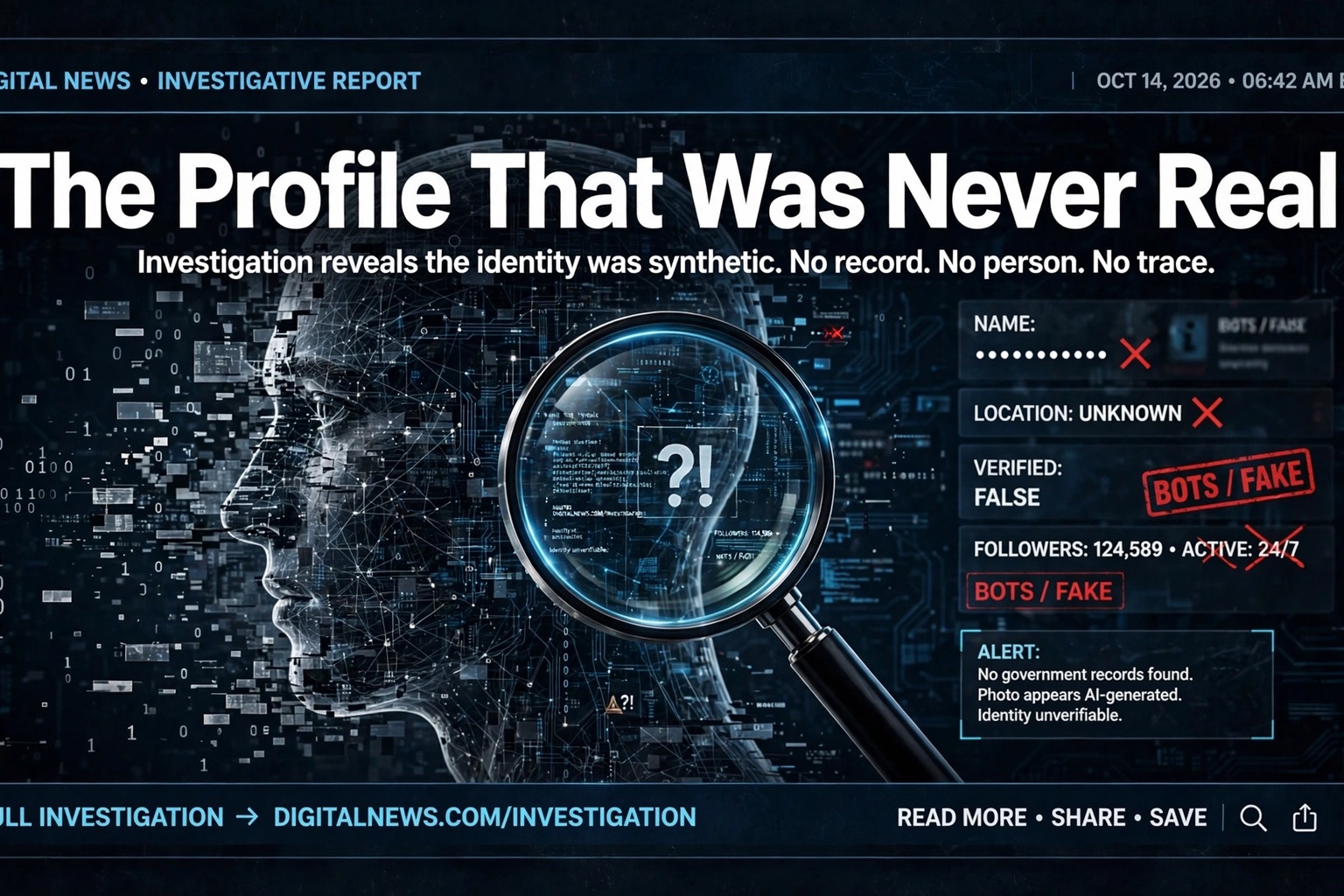
The photos were stunning — professional quality, warm smile, the kind of face that makes you stop scrolling. The bio was perfect: successful, kind, recently out of a long relationship, looking for something real. The messages were attentive, funny, personal. It felt like the algorithm had finally done its job.
None of it was real. Not the face, not the name, not the job, not the feelings. The profile that swept you off your feet never belonged to a person at all — it was a mask assembled from stolen photos and a script, worn by a criminal you’ll never meet.
How the mask gets made
The FTC explains the manufacturing process: romance scammers create fake profiles on dating sites and apps, or contact victims through popular social media sites like Instagram or Facebook. The photos are typically stolen — lifted from real people’s public profiles, stock-adjacent model shots, or the social media accounts of people who have no idea their face is working a second job as bait.
The FBI’s Los Angeles office adds the behavioral layer: these scammers are present on most dating and social media sites. They work to establish a relationship as quickly as possible and endear themselves to the victim. Many propose marriage and make plans to meet in person. Eventually, they ask for money. The profile is the lure; the relationship is the hook; the money request is the catch.
Why the mask is so hard to see through
The profile works because it’s built from your own data. The FBI warns to be careful what you post publicly — scammers use details shared on social media and dating sites to better understand and target you. Mention you love dogs, hiking, and Italian food, and the profile that messages you tomorrow loves dogs, hiking, and Italian food. It’s not chemistry. It’s research.
And the mask adapts. The FTC notes scammers adjust their story to whatever they think will work in each situation. Skeptical about the oil rig? Suddenly he’s in international logistics. Ask too many questions about the military? She’s a contractor now. The persona is liquid because it’s fictional.
Unmasking it
The unmasking tools are free and take minutes. The FBI’s advice: research the person’s photo and profile using online searches to see if the image, name, or details have been used elsewhere. A reverse image search — dragging their photo into a search engine — regularly reveals the same face under different names on different sites. That’s the mask slipping.
The FTC adds two more tests: search the claimed job plus the word ‘scammer’ to find identical stories from other victims, and talk to someone you trust about the relationship — because the mask only works in the dark. If the profile can’t survive daylight, it was never real. And the FTC’s standing rule closes the case: never send money or gifts to a sweetheart you haven’t met in person.
The FBI’s Los Angeles office adds a profiling tip that pairs with the photo check: beware if the individual seems too perfect, or quickly asks you to leave the dating service for private messaging. Perfection is a manufactured product — real people have blurry photos, awkward bios, and inconsistent texting habits. The too-perfect profile is focus-grouped bait, assembled from stolen images and optimized over thousands of attempts. And the rush off-platform is the second half of the trap: once you’re chatting privately, the platform’s fraud systems can’t see the con. Keep the conversation where you met them, run the photo through a reverse image search, and apply the FBI’s time test — if you haven’t met after a few months, you have good reason to be suspicious. Masks only work in the dark. Verification is daylight.
Disclosure: The stories on Love Lies Abroad are based on publicly reported accounts. We are not stating these as facts — this is what was reported. If you are featured in a story and believe it is inaccurate, contact us and we will review it, correct it, or take it down.
Submit a correction, documentation, context, or a response for private editorial review. Contact the editorial desk.
Join the conversation
Load Facebook comments to read and reply using your Facebook account.