
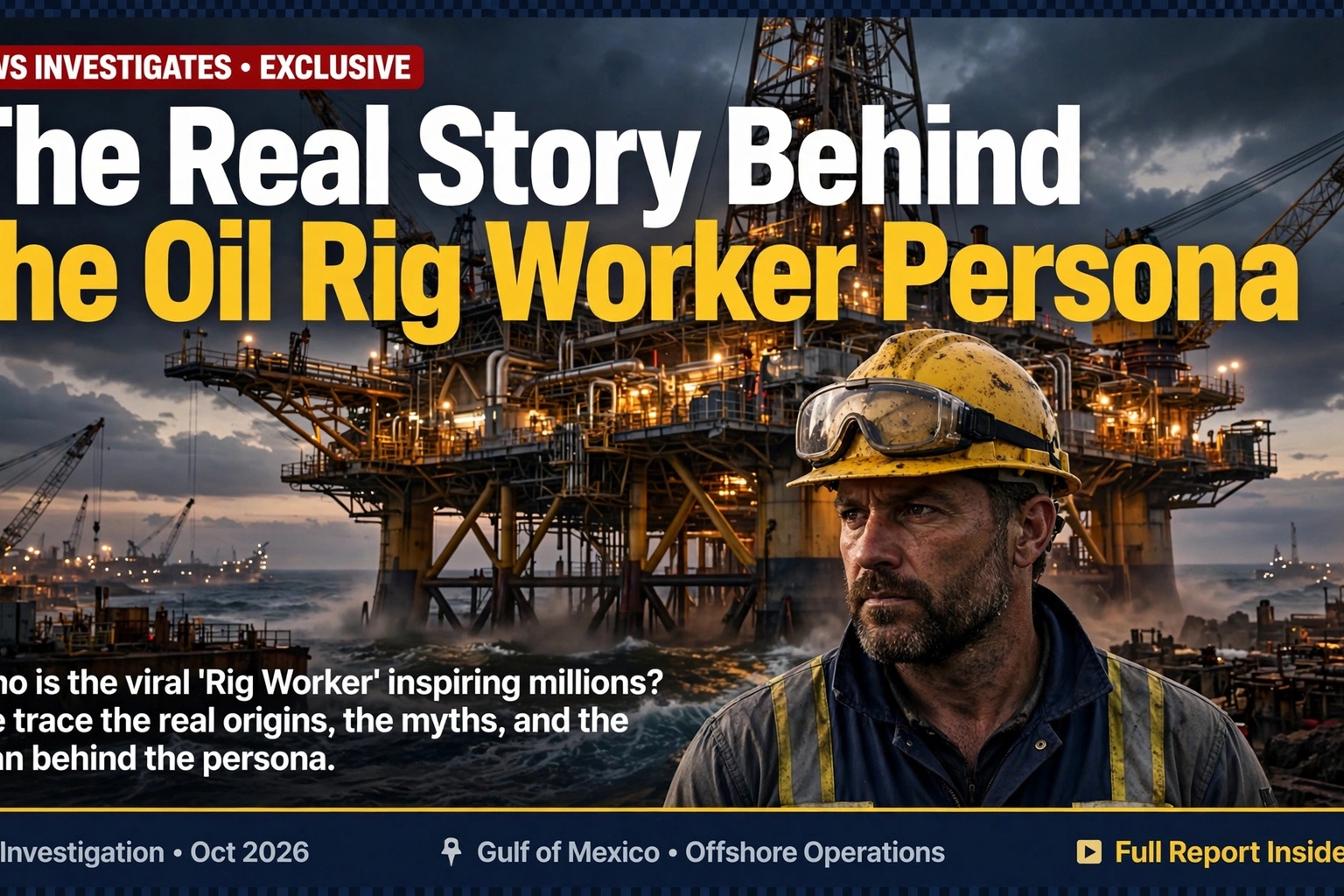
He’s handsome in a hard-hat selfie. He’s an engineer on an offshore rig — good money, dangerous work, lonely out there on the water. He can’t video call because the satellite connection is terrible. He can’t meet because his rotation got extended. But he texts like he means it, and he’s falling for you fast.
The FTC literally names this one. In its official romance scam guidance, the agency lists the standard can’t-meet-you lies scammers tell: living or traveling outside the country, working on an oil rig, serving in the military, or working with an international organization. The oil rig worker isn’t a person. It’s a costume — and it’s one of the most worn in the entire scam wardrobe.
Why the rig works
The persona is engineered around three features. First, money without access: he’s supposedly well-paid but can’t reach his funds — the perfect setup for asking you to ‘temporarily’ cover an emergency. Second, danger: rigs are hazardous, which makes medical-emergency scripts believable. Third, isolation: he’s offshore, unreachable, on a strict schedule — which explains why he can’t video call, can’t meet, and sometimes goes dark for days. Every limitation of the persona is a feature of the con.
The FBI’s Los Angeles office describes the broader pattern: scammers claim to live or work in other parts of the country or world to avoid meeting in person, and eventually request money for a medical emergency, an unexpected legal fee, or some other false purpose. The rig is just the most cinematic version.
The real story: it’s a search term
Here’s the tell the FTC wants you to use: search the job plus the word ‘scammer.’ The FTC’s own advice says to search for things like ‘oil rig scammer’ and see what comes up — because thousands of victims have posted nearly identical stories. The persona is so standardized that the stories rhyme: the extended rotation, the broken satellite phone, the emergency leave fee, the customs charge on equipment.
Real offshore workers exist, of course. But a real one can video call from the rig’s wifi, has coworkers, has a verifiable employer, and — critically — doesn’t ask romantic interests met online to wire money for emergencies. The FTC’s rule handles the rest: never send money or gifts to a sweetheart you haven’t met in person.
If your oil rig engineer needs your money more than his multinational employer’s payroll department does, you’re not dating an engineer. You’re funding a script.
The FTC’s verification advice is tailor-made for this persona: search the claimed job plus the word ‘scammer’ and read what comes up. ‘Oil rig scammer’ returns thousands of near-identical stories — the extended rotation, the satellite phone that never works, the emergency that needs your wire transfer. Real offshore employers are verifiable companies with real websites, real HR departments, and real payroll systems that don’t route through a girlfriend’s checking account. And real offshore workers, for all their isolation, live in 2026: they have messaging apps, video calls, and coworkers who exist. If your rig worker has none of those things but has urgent financial needs only you can solve, the FTC’s bottom line applies — never send money to a sweetheart you haven’t met in person — and the rig, like the romance, was never real.
Disclosure: The stories on Love Lies Abroad are based on publicly reported accounts. We are not stating these as facts — this is what was reported. If you are featured in a story and believe it is inaccurate, contact us and we will review it, correct it, or take it down.
Submit a correction, documentation, context, or a response for private editorial review. Contact the editorial desk.
Join the conversation
Load Facebook comments to read and reply using your Facebook account.