
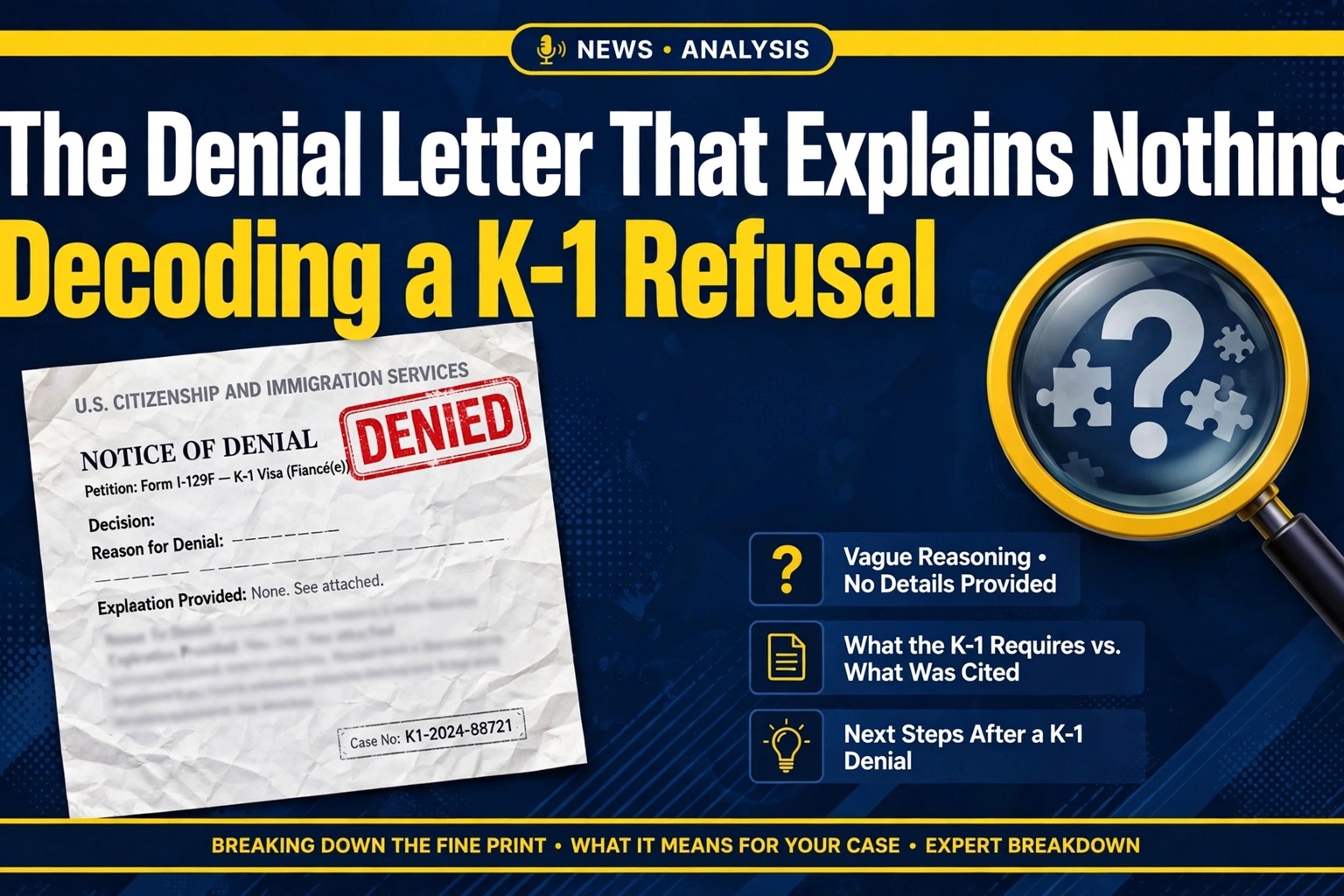
Some K-1 couples leave the embassy with a refusal slip that says almost nothing — a checked box, a cited code section, no real explanation of what went wrong or what to do next. The opacity is not an accident: consular decisions are deliberately summary. But the type of refusal determines everything about the path forward, and learning to read the slip is the first step out of the confusion.
Type one: 221(g), the “not yet” refusal
A refusal under section 221(g) of the Immigration and Nationality Act means the application is incomplete or needs further review: a missing document, a medical follow-up, or a case sent for administrative processing. This is the most common refusal and the least alarming. The slip should indicate what is needed, and the path forward is concrete — supply what was asked for, promptly and completely, then wait. Many 221(g) cases end in visa issuance. Treat the instructions on the slip as the entire strategy; improvising beyond them rarely helps.
Type two: the final refusal
A final refusal means the officer found the applicant ineligible — for example, a determination that the relationship is not bona fide, or an inadmissibility ground such as fraud, misrepresentation, or certain criminal history. The slip may cite the statute with little elaboration, which is why these letters feel so cryptic. Behind the checked box is usually a finding the officer formed during the interview, the document review, or background checks — and the couple’s first job is figuring out which finding it was, because the remedy depends entirely on the ground.
The hard truth about appeals
Here is the part nobody wants to hear: there is generally no appeal from a consular officer’s visa refusal. The doctrine of consular nonreviewability means courts do not second-guess these decisions in the ordinary case, a principle the Supreme Court has repeatedly affirmed. The practical remedies are a new I-129F petition once the underlying problem is fixed, or — for certain inadmissibility grounds — a waiver application where the statute provides one. None of these are quick, and all of them require understanding the refusal ground first.
Reading your own letter
Start by identifying the cited section on the slip. If it is 221(g), follow the instructions precisely and resist the urge to “improve” the case with unsolicited new evidence that raises fresh questions. If it is a final refusal, do not refile blindly — a second petition against the same unresolved ground wastes the $675 fee and another year. Map the ground, fix it if fixable, document the fix, and only then refile. A refusal involving fraud, misrepresentation, or criminal grounds should go straight to an immigration attorney before any next step is taken; those grounds have consequences that reach beyond the K-1 case. Informational only.
Keep every document from the refusal: the slip itself, the cited section, any checklists the officer provided. If you refile or seek a waiver later, that paper is the map of what went wrong — and memories of a stressful interview blur within weeks. Precision about the ground is what separates a successful second attempt from a repeated failure.
Sources: https://www.uscis.gov/family/family-of-us-citizens/visas-for-fiancees-of-us-citizens https://www.uscis.gov/i-129f
Disclosure: The stories on Love Lies Abroad are based on publicly reported accounts. We are not stating these as facts — this is what was reported. If you are featured in a story and believe it is inaccurate, contact us and we will review it, correct it, or take it down.
Submit a correction, documentation, context, or a response for private editorial review. Contact the editorial desk.
Join the conversation
Load Facebook comments to read and reply using your Facebook account.