
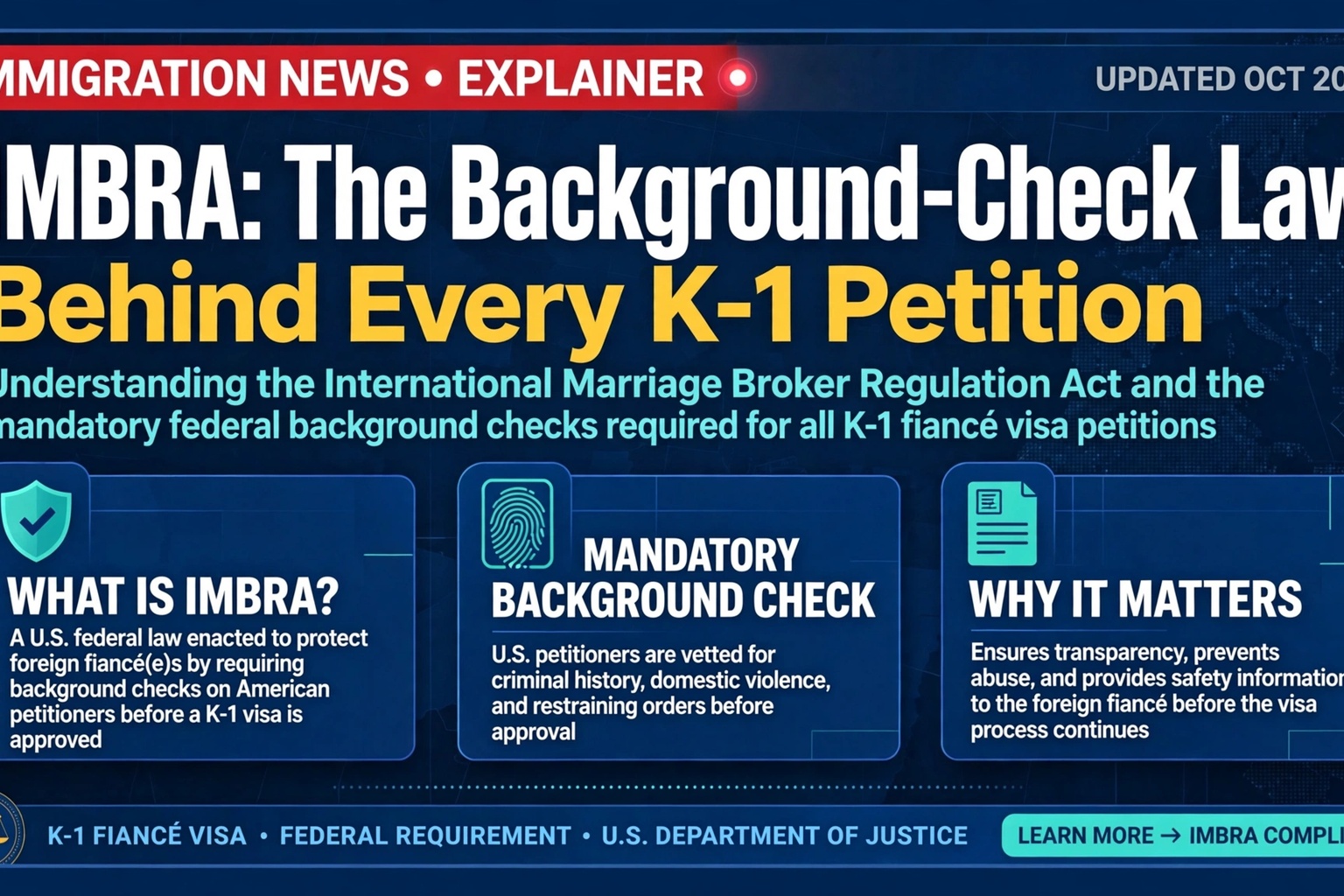
Most couples have never heard of IMBRA, but it shapes every K-1 case filed in America. The International Marriage Broker Regulation Act, enacted in 2005, was Congress’s response to abuse in international matchmaking — including cases where women were harmed by partners whose violent histories were hidden from them. It imposes disclosure duties on petitioners, information rights for beneficiaries, and hard limits on repeat filers that still surprise people today.
What IMBRA requires of petitioners
IMBRA requires U.S. citizen petitioners to disclose certain criminal history as part of the I-129F process — with particular attention to domestic violence, sexual assault, and related offenses. That background information, along with the petitioner’s prior sponsorship history, must be shared with the foreign beneficiary before the visa interview, so the person considering the move knows material facts about the petitioner. The State Department also provides the beneficiary with a pamphlet explaining legal rights and resources available to immigrant victims of domestic violence in the United States. The design is deliberate: the person relocating countries for a marriage should make that decision with eyes open.
The repeat-filer limits
IMBRA also caps serial petitioning. A petitioner who has filed two or more K-1 petitions in the past, or who had a K-1 petition approved within the two years before the new filing, must obtain a waiver from USCIS to file again. The waiver is discretionary — USCIS weighs the circumstances of the prior filings, and approval is not automatic. This is the provision that most often blindsides people: a citizen who previously sponsored a fiance(e), saw the relationship end, and is now engaged to someone new can discover that the second petition needs a waiver the first one never did. Plan for the extra adjudication time and build the strongest showing possible.
The marriage-broker rules
For couples who met through an international marriage broker, IMBRA imposes duties on the broker itself: collecting the client’s background information, obtaining consent before releasing personal contact details, and providing required disclosures. Reputable services comply as a matter of course. Couples should be wary of any service that seems unaware of these obligations — noncompliance by the broker can create problems for the petition built on that introduction.
Practical impact for most couples
For first-time petitioners with clean records, IMBRA is mostly invisible: a few extra disclosures in the petition package and the rights pamphlet at the interview stage. It becomes the central issue of the case for petitioners with qualifying criminal history or multiple prior K filings — exactly the situations where an immigration attorney’s guidance is most valuable. Understanding IMBRA before filing avoids the worst surprise in K-1 practice: learning about the waiver requirement from a denial notice. Informational only.
IMBRA also requires the petitioner to list prior K-1 filings accurately — omissions discovered later read as misrepresentation, which is far worse than the disclosure itself. When in doubt, disclose: the waiver process for repeat filers exists precisely for people with prior filings, while a concealment finding can poison the current case and future ones alike.
Sources: https://www.uscis.gov/i-129f https://www.uscis.gov/family/family-of-us-citizens/visas-for-fiancees-of-us-citizens
Disclosure: The stories on Love Lies Abroad are based on publicly reported accounts. We are not stating these as facts — this is what was reported. If you are featured in a story and believe it is inaccurate, contact us and we will review it, correct it, or take it down.
Submit a correction, documentation, context, or a response for private editorial review. Contact the editorial desk.
Join the conversation
Load Facebook comments to read and reply using your Facebook account.