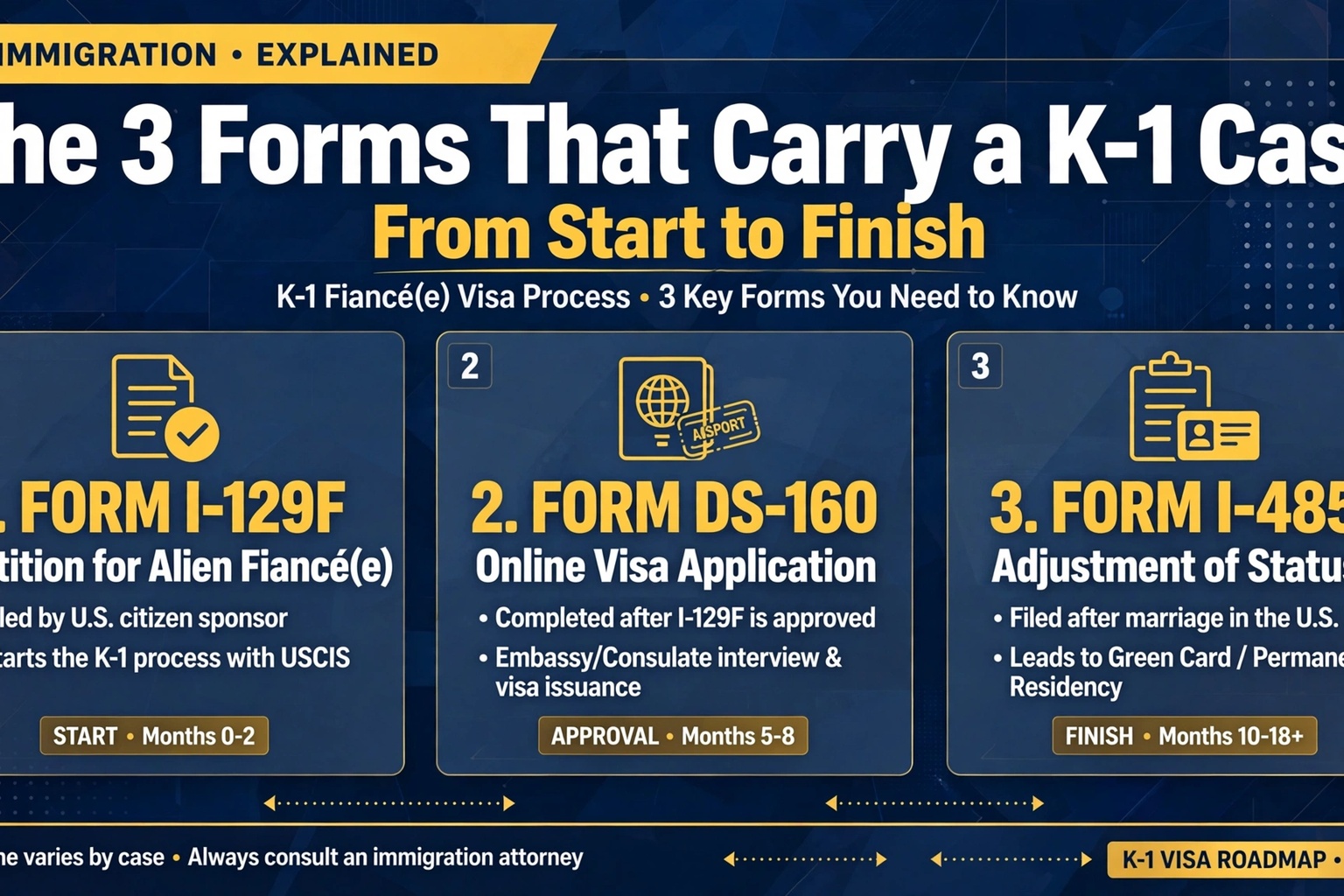
A K-1 case generates a small mountain of paper — civil documents, financial evidence, photos, translations — but three forms do the structural work. Understand these three and the entire process snaps into focus: petition, visa, green card.
Form 1: I-129F, Petition for Alien Fiance(e)
Filed by the U.S. citizen with USCIS, the I-129F is where the government first evaluates the relationship: the petitioner’s citizenship, both parties legally free to marry, an in-person meeting within the two years before filing, and genuine intent to marry within 90 days of admission. Filing fee: $675. The petition package carries the relationship evidence — photos together, travel records, message logs — and the signed intent statements from both partners. Approval (the NOA2 notice) sends the case to the National Visa Center. Everything downstream depends on this petition being solid, because the consular officer at the interview reads this file first. Weak evidence here echoes for the rest of the case, and there is no premium processing to buy speed.
Form 2: DS-160, Online Nonimmigrant Visa Application
Once the case reaches the embassy, the foreign fiance(e) completes the DS-160 online. This is the visa application itself: biographical data, passport details, travel history, and background questions on security, health, and immigration history. Accuracy matters enormously, because the consular officer compares DS-160 answers against the I-129F, the interview testimony, and the supporting documents. Inconsistencies — even innocent ones about dates, addresses, or employment history — are a leading source of interview trouble. Complete it carefully, print the confirmation page, and bring it to the interview; a rushed DS-160 is one of the most common unforced errors in the process.
Form 3: I-485, Application to Adjust Status
After entry and the wedding, the foreign spouse files Form I-485 with USCIS to become a lawful permanent resident — the step that converts the 90-day K-1 admission into a green card. Current fee: $1,440 for an adult ($950 for a qualifying child), with biometrics bundled in. This stage includes a biometrics appointment and usually a USCIS interview focused on the bona fides of the marriage: how the couple met, the wedding, daily life together. Until the I-485 is approved, working requires employment authorization and international travel requires advance parole — leaving without parole abandons the application.
The supporting cast
Around these three orbit the forms that handle the transitions: the I-134 affidavit of support at the interview stage, the I-864 affidavit at adjustment, the I-765 for work permits, the I-131 for travel documents, and the I-751 down the road if the green card is conditional. But the skeleton of every K-1 case is the same three bones — I-129F, DS-160, I-485 — petition, visa, green card. Master those and the rest is detail. Informational only; verify current fees on uscis.gov before filing.
Think of the three forms as a relay: the I-129F proves the relationship to USCIS, the DS-160 presents the applicant to the State Department, and the I-485 converts the admission into residence. A weakness passed in the first leg — thin relationship evidence, an unclear meeting history — gets heavier in each later leg, which is why front-loading care pays compound interest.
Sources: https://www.uscis.gov/i-129f https://www.uscis.gov/i-485
Disclosure: The stories on Love Lies Abroad are based on publicly reported accounts. We are not stating these as facts — this is what was reported. If you are featured in a story and believe it is inaccurate, contact us and we will review it, correct it, or take it down.
Submit a correction, documentation, context, or a response for private editorial review. Contact the editorial desk.
Join the conversation
Load Facebook comments to read and reply using your Facebook account.