
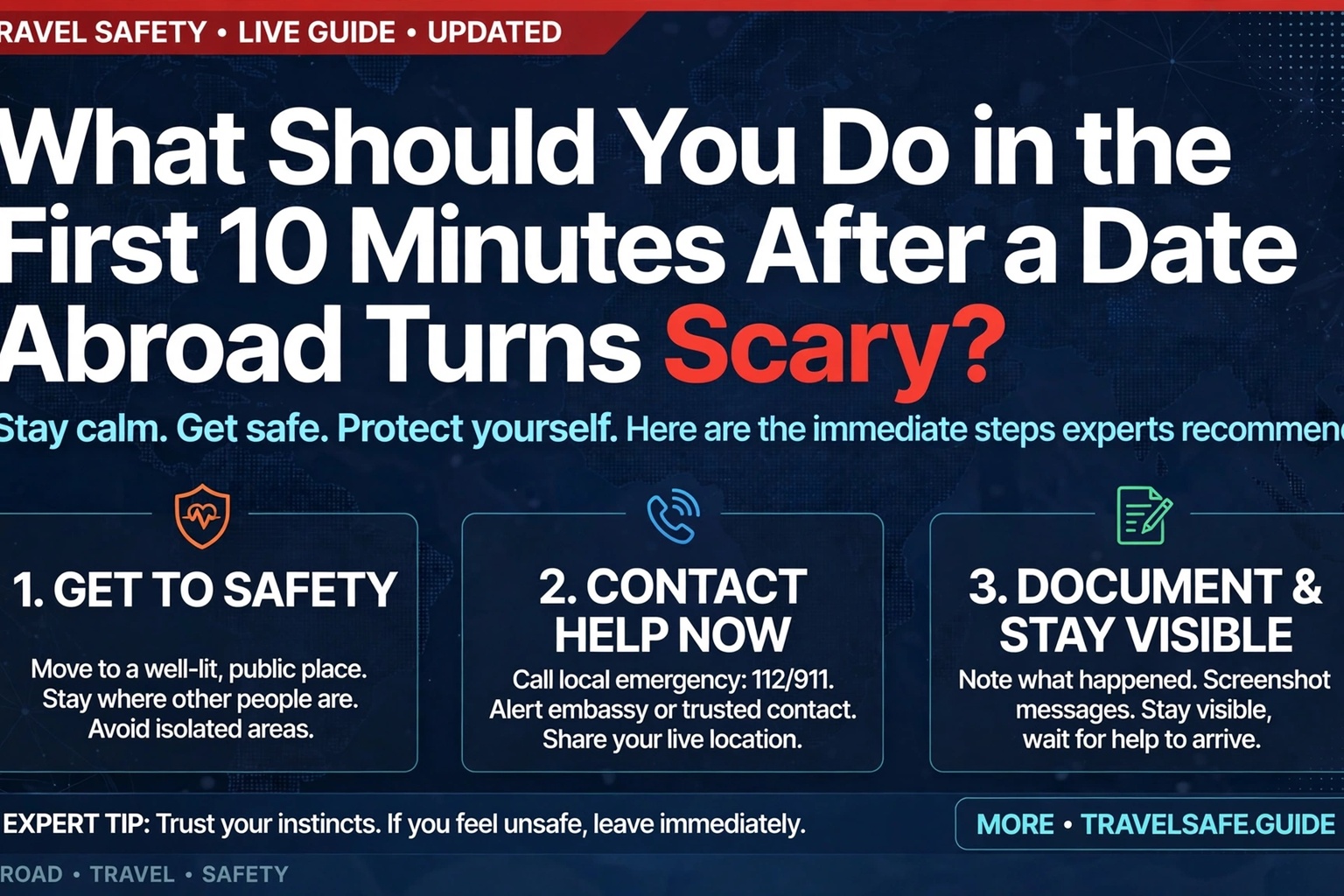
You’re in a city you barely know, on a date with someone you’ve mostly known through a screen, and something just shifted. Maybe the venue changed at the last minute. Maybe they’re pushing you to leave the restaurant. Maybe your stomach is doing something your brain hasn’t caught up with yet. This is the moment your whole safety plan was built for — and the first ten minutes are the ones that count most.
Here’s the uncomfortable truth about cross-border dating: you planned the romance, but did you plan the exit? Most people don’t. They memorize the restaurant reservation and forget the emergency number. They save their date’s playlist but not their hotel’s address in the local language. When the vibe turns, they’re improvising — in a foreign city, possibly with a dying phone, definitely with adrenaline doing the thinking.
Minutes 0–2: Trust the signal and create distance
Your body is a better threat detector than your optimism. Security professionals have said for decades that intuition is rapid pattern recognition, not magic — if something feels wrong, it usually is. Don’t debate it. Create physical distance first: excuse yourself to the restroom, step outside for air, move toward staff or a crowd. Distance buys you the one thing you need most — a clear head.
Minutes 2–5: Tell someone where you are
This is why you set up a check-in buddy before the trip. Text them your live location and a short, clear message: your location, who you’re with, and that you feel unsafe. Keep it simple — “Café Luna, Rua Augusta 44, with Daniel, feel unsafe, will update in 15.” If you didn’t set up a buddy system, text a family member or friend back home anyway. Any informed person beats no informed person.
Minutes 5–10: Get yourself to safety, then decide
Leave. You do not owe anyone an explanation, a goodbye, or politeness. Pay your share or don’t — your safety outranks the bill. Head for the most public, well-lit place you can find: a hotel lobby, a busy café, a taxi rank. Use a rideshare app or a licensed taxi, never an offered ride from your date or their friends. Once you’re somewhere safe, then you can think about next steps: contacting your hotel, your embassy, or local police.
Before the date: the prep that makes this possible
None of the above works without setup. Before any first meeting abroad, save the local emergency number in your phone — it’s 112 across the European Union, 911 in the United States, and different elsewhere, so check before you fly. Register your trip with your government’s traveler program if one exists: the U.S. State Department runs the free Smart Traveler Enrollment Program (STEP) so the nearest embassy can reach Americans in an emergency, and the UK’s crisis-abroad guidance explains exactly what consular help can — and can’t — do for you. Keep your phone charged, carry a portable battery, and keep your hotel’s address written down — not just in your phone, in case the phone dies.
If it escalates beyond “uncomfortable”
If you’ve been threatened, followed, or assaulted, go to the nearest police station or call local emergency services first, then contact your embassy or consulate. Consular officers can help you find local resources, contact family, and navigate unfamiliar systems — the UK Foreign Office publishes clear guidance for citizens in crisis overseas, and Canada’s travel.gc.ca portal offers the same kind of official support resources. You don’t need to have everything figured out; you just need to reach one official channel, and they take it from there.
The goal of the first ten minutes isn’t heroics. It’s boring, unglamorous competence: distance, a message, a ride, a safe door. Plan it once, and you’ll never have to improvise it.
Disclosure: The stories on Love Lies Abroad are based on publicly reported accounts. We are not stating these as facts — this is what was reported. If you are featured in a story and believe it is inaccurate, contact us and we will review it, correct it, or take it down.
Submit a correction, documentation, context, or a response for private editorial review. Contact the editorial desk.
Join the conversation
Load Facebook comments to read and reply using your Facebook account.