
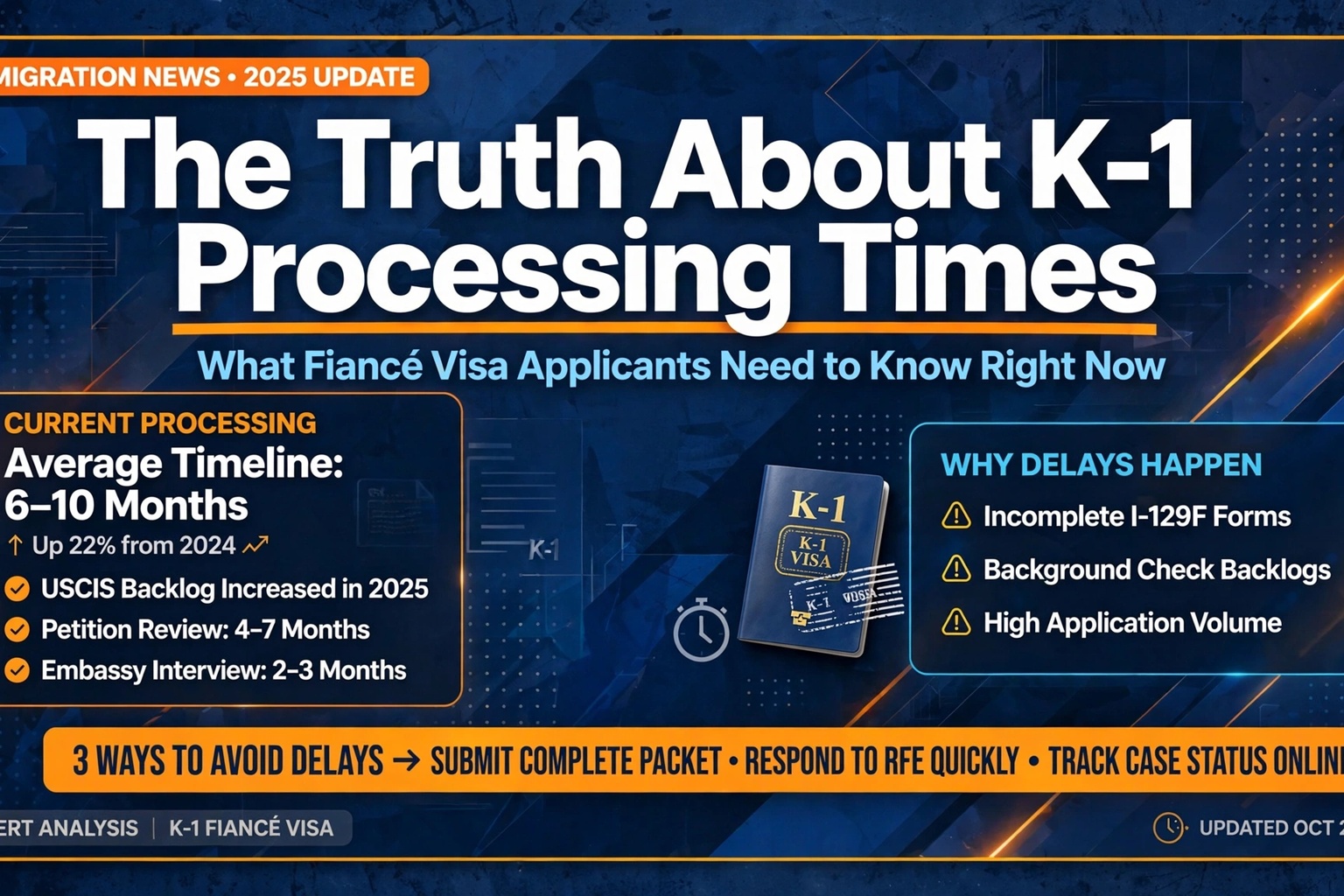
Ask ten couples how long their K-1 case took and you will get ten different answers — from under a year to the better part of two. Nobody is misremembering. K-1 processing times genuinely swing with USCIS workload, service center assignment, embassy backlogs, and whether the case draws a Request for Evidence. The real story is that there is no fixed timeline — only stages, each with its own variables, and a total that couples should plan around honestly.
Stage one: the I-129F petition
This is usually the longest single wait. After the U.S. citizen files Form I-129F, USCIS adjudicates it at a service center, and published processing times for the petition have stretched from many months to well over a year in recent periods. The only reliable number is the one on USCIS’s own case processing times tool, checked for the I-129F at the service center shown on the receipt notice. Anyone quoting a friend’s timeline as a promise is guessing. Note that unlike some employment petitions, the I-129F has no premium processing option — there is no fee that buys faster adjudication.
Stage two: the National Visa Center
Once USCIS approves the petition, the National Visa Center assigns a case number, runs checks, and forwards the file to the embassy or consulate. For K cases this handoff is typically measured in weeks rather than months — the shortest and most predictable stage of the journey. Confusion here usually comes from two agencies’ trackers showing different statuses during the handoff, which is normal.
Stage three: embassy and interview
Here the timeline belongs to the post. Some embassies schedule K-1 interviews within weeks of receiving the case; others carry backlogs of months. The panel physician medical exam, police certificate gathering, and document preparation all live in this stage, and applicants control more of this timeline than any other — having documents ready before the case arrives is the single biggest lever. After the interview, administrative processing can add an open-ended wait for a minority of cases.
What stretches a case
A Request for Evidence pauses USCIS review until the petitioner responds, commonly adding months to stage one. Incomplete police certificates stall stage three before it starts. A medical exam completed too early can expire before the interview; too late, and it delays scheduling. And embassy backlogs compound everything downstream. The total journey from filing to visa in hand commonly spans a year or more — couples who plan their housing, jobs, and wedding dates around that reality suffer far less than those who plan around the fastest anecdote they heard.
When waiting becomes action
Track the case through the USCIS online case status tool. If it runs past posted processing times, file a formal case inquiry. If the inquiry goes nowhere over additional months, congressional casework or the DHS immigration ombudsman are established escalation paths, and an attorney can assess whether litigation to compel a decision fits the facts. Most cases, though, simply need patience plus complete paperwork. Informational only.
Sources: https://www.uscis.gov/i-129f https://www.uscis.gov/family/family-of-us-citizens/visas-for-fiancees-of-us-citizens
Disclosure: The stories on Love Lies Abroad are based on publicly reported accounts. We are not stating these as facts — this is what was reported. If you are featured in a story and believe it is inaccurate, contact us and we will review it, correct it, or take it down.
Submit a correction, documentation, context, or a response for private editorial review. Contact the editorial desk.
Join the conversation
Load Facebook comments to read and reply using your Facebook account.