
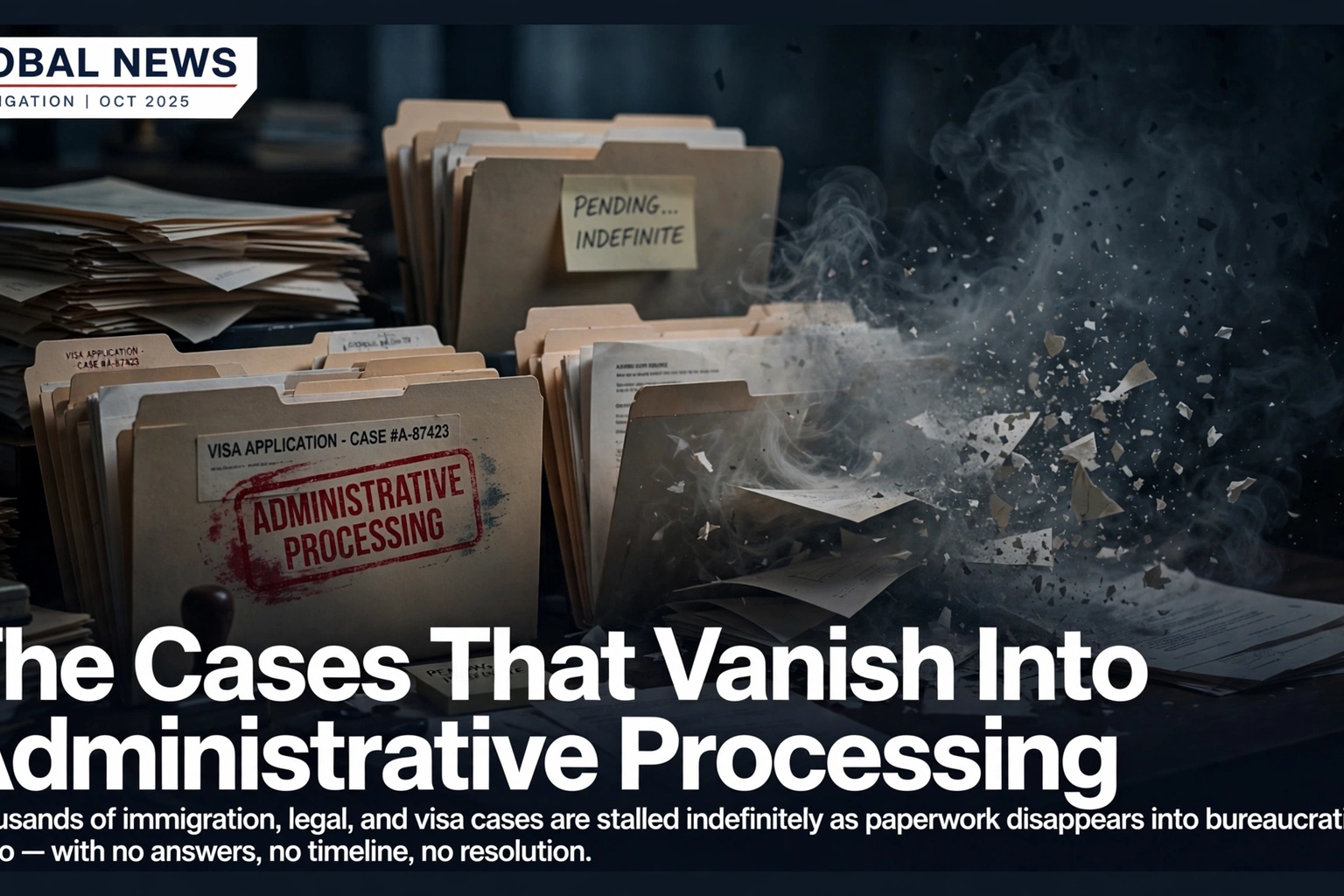
The interview went fine. The officer smiled, kept the passport, and said the case needed “administrative processing.” Then — silence. Weeks become months. The case tracker never changes. For K-1 couples, administrative processing is the Bermuda Triangle of the visa process: cases enter, and nobody can say when they come out.
What administrative processing actually is
When a consular officer cannot issue a decision at the interview, the case may be refused under section 221(g) of the Immigration and Nationality Act pending further review. In practice, “administrative processing” covers additional background and security checks, interagency name checks, or verification of documents the officer wants to confirm. It is not a denial, but it is not a pending approval either — it is a hold with no published timeline. The refusal slip given at the interview should indicate what, if anything, the applicant needs to provide.
Why some K-1 cases get flagged
Common triggers include prior travel to regions of heightened concern, common names that produce database matches, prior visa refusals, incomplete police or civil documents, employment in sensitive technical fields, and inconsistencies the officer wants to resolve quietly. Sometimes there is no discernible trigger at all — routine checks simply take longer for some files than others. That randomness is part of what makes the experience so disorienting; couples search for a reason where there may not be one.
What you can — and cannot — do
The State Department’s honest guidance is to wait. Applicants can follow case status through the Consular Electronic Application Center using the case number, and after a long stretch — commonly framed as around 60 days beyond the interview — may inquire with the embassy about status. Congressional casework offices sometimes make inquiries on constituents’ behalf, but no outside pressure can force security checks to finish faster. What genuinely helps: keeping the passport valid, not making irreversible travel or wedding plans, keeping the petition’s validity alive (the consular officer can revalidate an expired I-129F approval), and responding immediately if the embassy requests anything further.
What not to do
Do not withdraw the application in frustration — withdrawal ends the case and a new petition starts the clock at zero. Do not bombard the embassy with daily emails; it does not accelerate checks and can complicate the file. Do not assume silence means denial; the overwhelming majority of administrative processing cases eventually resolve with visa issuance. And do not let required documents expire while waiting — police certificates and medical results have limited validity windows, and an expired document can restart part of the process just as the hold lifts.
The unsolved part
There is no public dataset on average K-1 administrative processing durations, and no appeal from being placed in it. Most cases do resolve. Until yours does, the strategy is patience backed by documentation — and an immigration attorney if the delay stretches toward a year or the underlying facts suggest a deeper problem. Informational only.
Couples should also keep the underlying I-129F approval valid during long administrative processing; a consular officer can revalidate an expired petition, but flagging the expiration early avoids a last-minute scramble when the checks finally clear.
Sources: https://www.uscis.gov/family/family-of-us-citizens/visas-for-fiancees-of-us-citizens https://www.uscis.gov/i-129f
Disclosure: The stories on Love Lies Abroad are based on publicly reported accounts. We are not stating these as facts — this is what was reported. If you are featured in a story and believe it is inaccurate, contact us and we will review it, correct it, or take it down.
Submit a correction, documentation, context, or a response for private editorial review. Contact the editorial desk.
Join the conversation
Load Facebook comments to read and reply using your Facebook account.